
World Cup 2026 Prediction Markets
Compare World Cup 2026 prediction markets across Polymarket, Kalshi, and sportsbooks. Learn how pricing, liquidity, access, regulation, and exits differ.
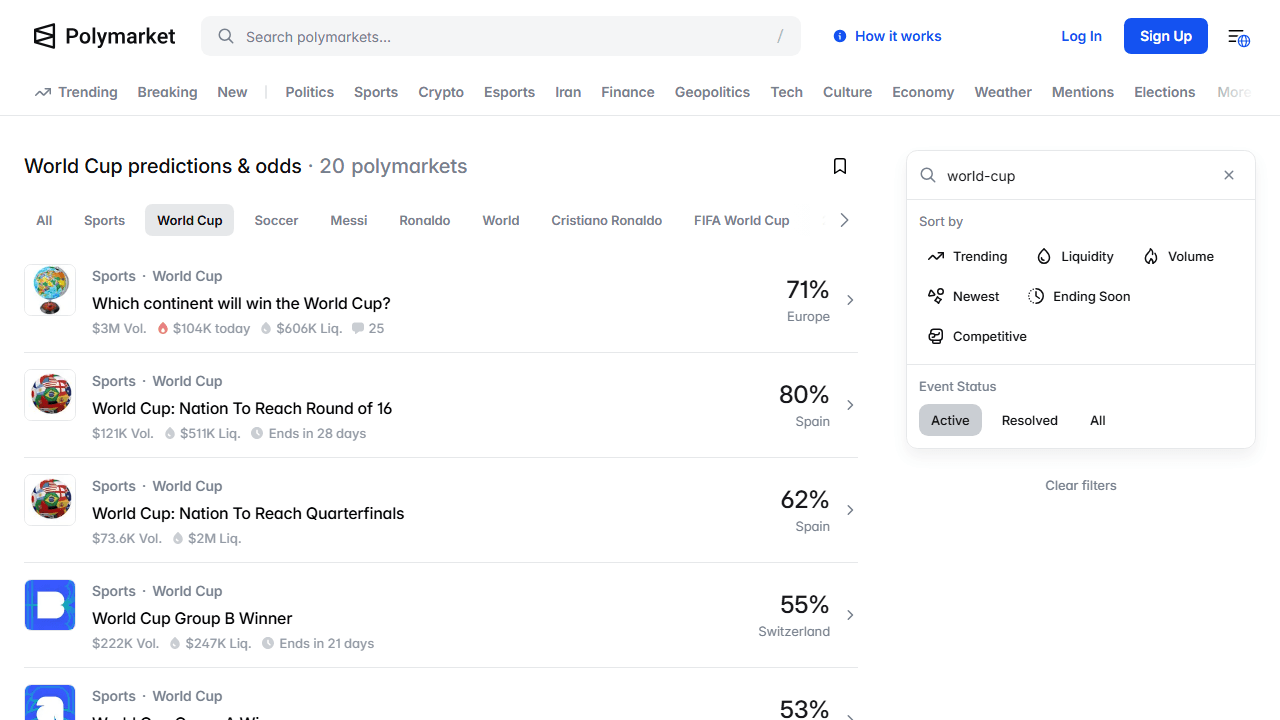
World Cup 2026 prediction markets can show tradable prices for tournament winners, group winners, player props, match outcomes, and special markets. Polymarket, Kalshi, and sportsbooks may all quote World Cup outcomes, but they differ in access rules, regulation, fee structure, liquidity, settlement wording, and whether a user can exit before resolution.
- Do not compare World Cup markets only by the headline percentage. Compare access, liquidity, spread, fees, exit options, and resolution wording.
- Polymarket works like an outcome-share market, Kalshi uses regulated event contracts, and sportsbooks offer bookmaker odds with different margin and cashout mechanics.
- Use Predicts.guru before choosing a source so the market price sits beside event analytics, trader context, wallet behavior, and official tournament facts.
The short version
Use this comparison as a starting point. Prediction markets and sportsbooks can answer the same sports question with different mechanics, so the platform type matters as much as the price.
Polymarket gives outcome-share market prices with global crypto-native liquidity and broad market coverage. Kalshi gives a U.S.-regulated event-contract structure. Sportsbooks give familiar betting odds, promotions, and account flows.
| Platform type | What you are reading | Main strength | Main check |
|---|---|---|---|
| Polymarket | Outcome-share market prices | Global crypto-native liquidity and broad coverage | Access rules, liquidity, spread, and resolution wording |
| Kalshi | Regulated event contracts | U.S.-regulated prediction-market structure | State access, fees, depth, and exact contract terms |
| Sportsbooks | Betting odds | Familiar sports betting interface and promotions | Book margin, account limits, cashout rules, and jurisdiction |
How Polymarket World Cup markets work
Polymarket markets use shares tied to outcomes. A Yes share around 40 cents roughly implies a 40% market probability. If the outcome resolves correctly, a winning share pays $1.
For World Cup 2026, the Polymarket ecosystem can include markets around tournament winner, group winners, teams reaching knockout stages, player markets, and special tournament events.
The practical advantage is tradability. A user may be able to sell a position before the event resolves if there is enough liquidity. That can matter during a tournament where prices move after each match.
The practical risk is market structure. A displayed price can be less useful when liquidity is thin, spread is wide, or the market rules are vague.
How Kalshi World Cup markets differ
Kalshi is a regulated prediction market exchange in the U.S. Its World Cup-related pages and media coverage position it as a U.S.-regulated venue for event contracts.
That does not make every comparison simple. A reader still needs to check whether the contract is available in their location, contract wording, fees, liquidity, order book depth, expiration rules, settlement rules, and tax-reporting implications.
Kalshi pages may show access checks or security screens depending on your session. Open Kalshi directly and verify the contract terms, location rules, and live order book before comparing it with Polymarket.
How sportsbooks differ
Sportsbook odds come from a book. The book sets the line, includes margin, and controls the betting product.
Sportsbooks may be easier for sports bettors to understand. They may also offer familiar markets, promotions, and account flows.
The tradeoff is flexibility. With a sportsbook futures bet, you often cannot trade in and out like an exchange position. Some books offer cashout, but cashout is a product feature controlled by the book, not the same as selling into an open market.
Sportsbook odds can still be useful for comparison because they can show where prediction-market prices look rich or cheap. The comparison still needs fees, margin, limits, and rules.
Do not start with which price is best. Start with structure, because similar-looking World Cup markets may not resolve, trade, or exit the same way.
The World Cup is a useful case study because the event has a long timeline and many submarkets. Winner markets, group markets, player props, and match markets can each have different liquidity profiles.
| Check | Why it matters |
|---|---|
| Access | Platforms and products can be restricted by country or state. |
| Market question | Similar-looking markets may resolve on different wording. |
| Liquidity | Better prices are not useful if you cannot enter or exit. |
| Spread | Wide spreads can erase the apparent difference between venues. |
| Fees | Fees change the real price. |
| Settlement rules | A contract can resolve differently from how fans discuss the event. |
| Exit options | Prediction markets may allow selling before resolution; sportsbooks may not. |
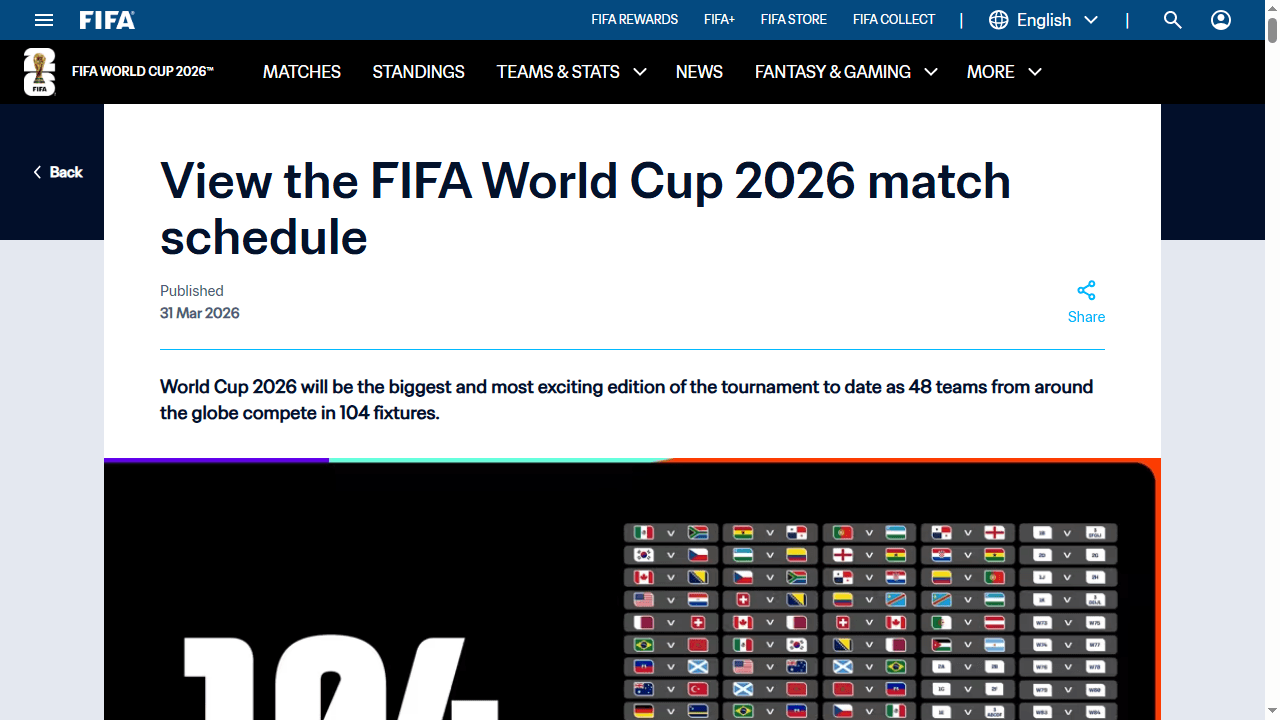
| Source of truth | FIFA should control tournament facts, not market commentary. |
The 2026 FIFA World Cup has 48 teams, 12 groups, and 104 matches across Canada, Mexico, and the United States. That creates more market surface area: more group-stage scenarios, a Round of 32, more advancement markets, more player props, more venue and schedule effects, and more places where prices can disagree across platforms.
More markets do not automatically mean better prices. They mean more places where liquidity, spread, and contract wording can diverge.
Use Predicts.guru before you treat a World Cup price as useful. Start with the live event list, then compare price movement, market activity, top traders, wallet behavior, and cross-venue differences when they are available.
That gives you context before you open a position anywhere. A price on its own tells you what traders are quoting; the surrounding data tells you whether the quote deserves trust.
Polymarket, Kalshi, and sportsbooks can all price World Cup outcomes. The useful comparison starts with the number on the screen, then checks the structure behind it.
Compare market structure, access, liquidity, spread, fees, exit options, and resolution rules. Then use official FIFA sources to verify tournament facts.
A better reader does not ask which platform has the best odds first. He asks which price can be trusted enough to analyze.
Educational content only. It is not financial, betting, legal, or tax guidance. Verify live platform terms, market rules, liquidity, and official FIFA facts before relying on any price.
Check these official Polymarket sources before you act on referral terms, deposit methods, fees, availability, verification, or resolution details.
Last verified: Jun 5, 2026
Use Predicts.guru to review market activity, liquidity context, and trader behavior before treating a price as signal.
Check the live Polymarket World Cup hub for current prices, rules, and market availability.
Tools and related reading referenced by this guide.
Continue with nearby Polymarket research topics.
Learn how Polymarket World Cup odds work: implied probability, liquidity, bid-ask spreads, resolution rules, and checks before relying on a market price.
Learn how to read Polymarket World Cup 2026 group winner markets, implied probabilities, liquidity, spreads, FIFA rules, and Group A-L odds.
Learn how to read Polymarket World Cup 2026 Round of 16 markets, why they differ from group advancement odds, and what to check before trusting a price.