
How Polymarket World Cup Odds Work
Learn how Polymarket World Cup odds work: implied probability, liquidity, bid-ask spreads, resolution rules, and checks before relying on a market price.
Polymarket World Cup odds are outcome-share prices. A Yes share at 62 cents roughly implies a 62% market probability and pays $1 only if the market resolves correctly. That price is not a guarantee. Read it together with liquidity, bid-ask spread, volume, market wording, resolution source, and current platform access rules.
- A Polymarket World Cup price is a tradable probability signal, not a finished forecast.
- Liquidity, spread, volume, and rules can make the displayed percentage less useful than it looks.
- FIFA sources should verify tournament facts while the Polymarket market page verifies prices, rules, and resolution wording.
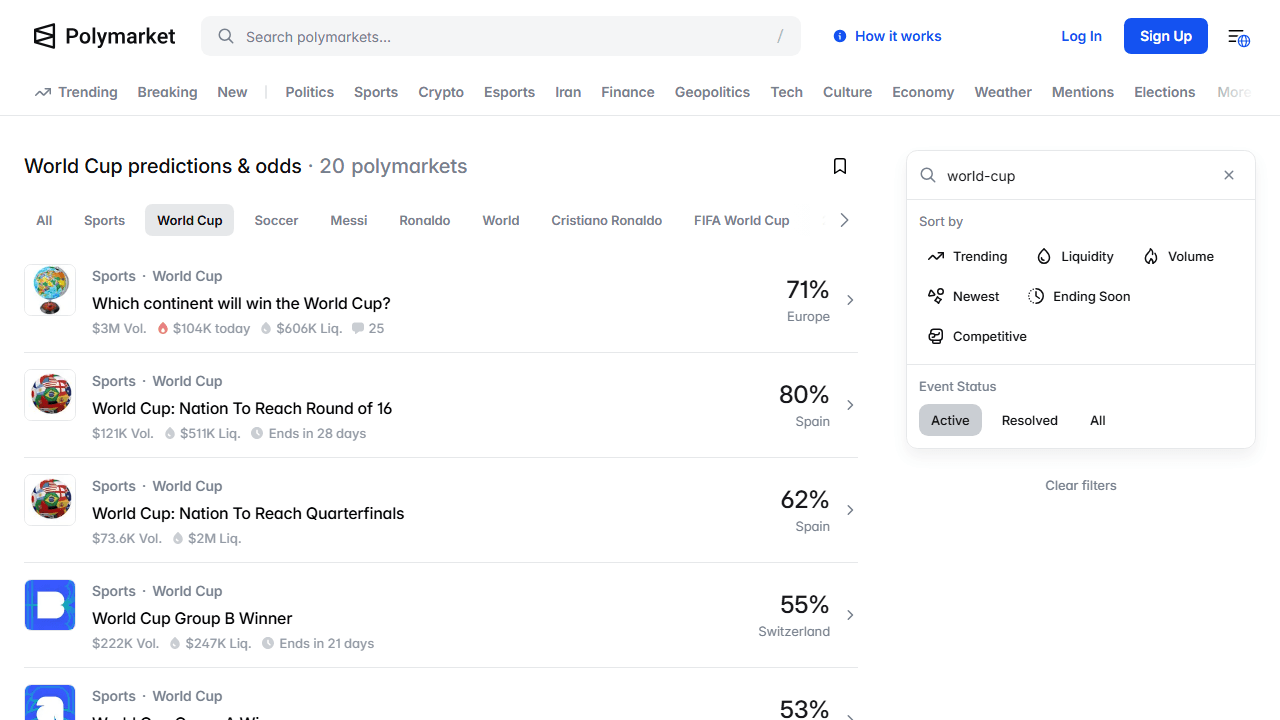
Polymarket prices are implied probabilities
On Polymarket, many markets use shares that pay $1 if the outcome happens and $0 if it does not. That makes the price easy to translate. World Cup examples can include a national team winning the tournament, a team winning its group, a team reaching the Round of 16, a player finishing as top goalscorer, or a special event market tied to the tournament.
The market price gives you a quick read on trader consensus. It does not remove uncertainty.
| Share price | Rough implied probability |
|---|---|
| $0.10 | 10% |
| $0.25 | 25% |
| $0.50 | 50% |
| $0.75 | 75% |
| $0.90 | 90% |
Why the displayed price can mislead you
The displayed price can look cleaner than the market behind it. Liquidity shows how much size sits behind the price, spread shows the gap between the best bid and best ask, volume shows how much has traded, and rules define what must happen for the market to resolve.
A market can show 60% and still be hard to trade if there is not enough depth. A market can show 35% while the real executable price is worse because the bid-ask spread is wide. A market can show high volume from old trading but have weak current liquidity.
That is why Polymarket odds should be read like a live order book, not like a simple sportsbook line.
Polymarket vs sportsbook odds
Sportsbook odds come from a bookmaker. The book posts a line and controls the product. In most cases, you cannot sell the position before the event resolves.
Polymarket works more like a market. Traders buy and sell outcome shares. You may be able to exit before resolution, but your exit depends on available buyers, sellers, liquidity, and spread.
That difference matters during the World Cup. If a team wins its first group match, its outright winner price may rise before the knockout rounds. A trader who bought earlier may be able to sell the position before the final. A sportsbook futures ticket usually does not give the same direct market exit.
The flexibility has a cost. You still face slippage, liquidity limits, platform rules, and access restrictions.
Resolution rules decide the payout
The exact market question controls the payout. For a World Cup winner market, the question may resolve according to the team that wins the 2026 FIFA World Cup. For a group winner market, the market should resolve according to official group standings. For a top goalscorer market, the rules may include FIFA tie criteria.
Read the rules before you read the chart. Check the primary resolution source, fallback source, postponement language, cancellation language, tie rules, resolution deadline, and special edge cases.
This can matter more than team analysis. A reader can be right about football and wrong about the contract.
Polymarket prices can help you see what traders think. FIFA sources tell you what the tournament is.
Use official FIFA pages for match schedule, groups, venues, qualification structure, tiebreak rules, final standings, and official results. When market commentary and FIFA rules disagree, the official source matters more for factual claims.
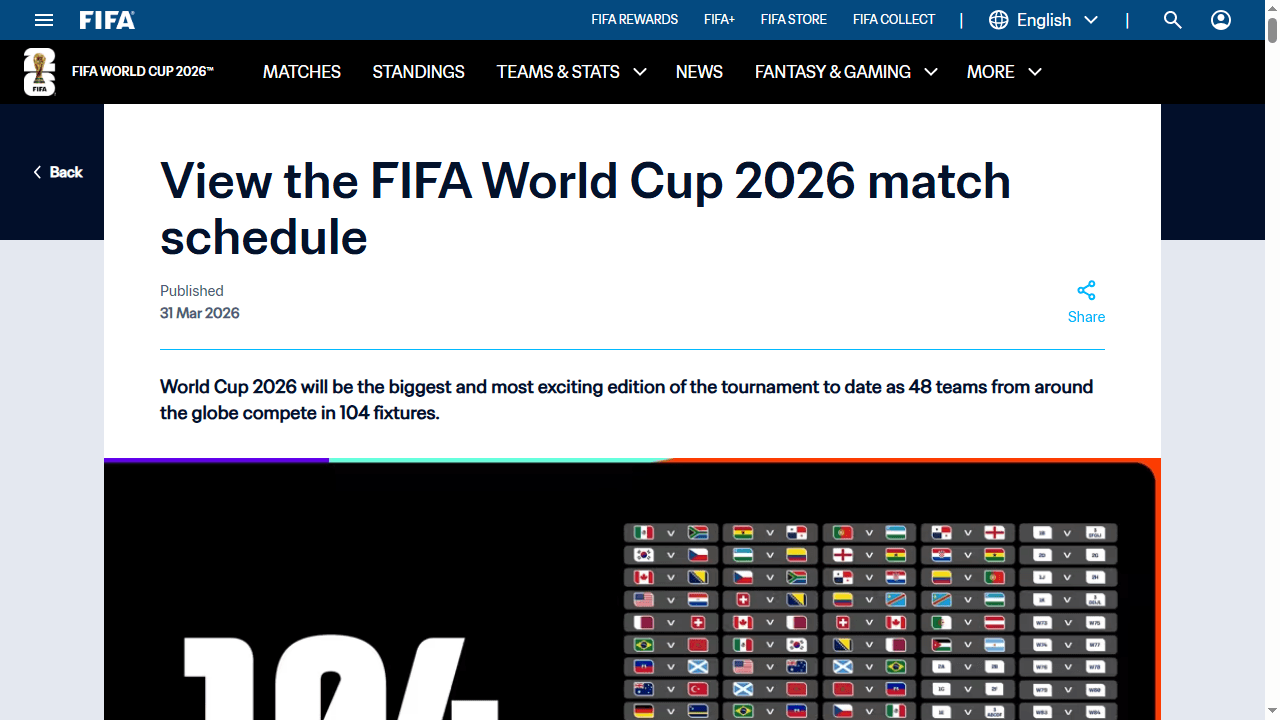
World Cup prices move when traders update their assumptions. The main drivers include confirmed squads, injuries, suspensions, starting lineups, group-stage results, goal difference, tiebreak pressure, travel and venue effects, weather, knockout bracket path, and liquidity entering or leaving the order book.
Market structure can move prices too. A large order in a thin market can shift the displayed probability without changing the true football outlook. A price move needs diagnosis: did new information arrive, or did a thin book get pushed?
Use this checklist before relying on any World Cup market price. If a page cannot answer these questions, it should not call itself serious market analysis.
| Step | Question |
|---|---|
| 1 | What is the exact market question? |
| 2 | What outcome am I reading? |
| 3 | What is the current price and time checked? |
| 4 | How much liquidity sits near the price? |
| 5 | How wide is the bid-ask spread? |
| 6 | What volume has traded? |
| 7 | What source resolves the market? |
| 8 | What edge cases are in the rules? |
| 9 | What official FIFA fact could move the price? |
| 10 | Does platform access depend on country or local rules? |
Polymarket World Cup odds are useful because they compress trader behavior into a live price. They are dangerous when readers treat that price as a finished forecast.
Read the price. Then check liquidity, spread, volume, rules, and official FIFA context. If those pieces do not line up, the displayed probability deserves less trust.
Educational content only. It is not financial, betting, legal, or tax guidance. Verify live platform terms, market rules, liquidity, and official FIFA facts before relying on any price.
Check these official Polymarket sources before you act on referral terms, deposit methods, fees, availability, verification, or resolution details.
Last verified: Jun 5, 2026
Use Predicts.guru to review market activity, liquidity context, and trader behavior before treating a price as signal.
Check the live Polymarket World Cup hub for current prices, rules, and market availability.
Tools and related reading referenced by this guide.
Continue with nearby Polymarket research topics.
Compare World Cup 2026 prediction markets across Polymarket, Kalshi, and sportsbooks. Learn how pricing, liquidity, access, regulation, and exits differ.
Learn how to read Polymarket World Cup 2026 group winner markets, implied probabilities, liquidity, spreads, FIFA rules, and Group A-L odds.
How to read Polymarket World Cup 2026 top goalscorer odds, Golden Boot implied probabilities, tie rules, player minutes, team path, liquidity, and market risk.