
Polymarket World Cup Round of 16 Markets
Learn how to read Polymarket World Cup 2026 Round of 16 markets, why they differ from group advancement odds, and what to check before trusting a price.
Polymarket's World Cup Round of 16 market is not the same as group advancement. In 2026, group advancement sends teams to the Round of 32. A nation reaches the Round of 16 only after it also wins its first knockout match, so the price combines group survival with bracket-path risk.
- The 2026 format adds a Round of 32, so Round of 16 prices include one extra knockout step.
- A team can look safe to leave the group and still have a lower chance to reach the Round of 16.
- Read Round of 16 odds with liquidity, spread, market rules, FIFA format, and the likely Round of 32 opponent path.
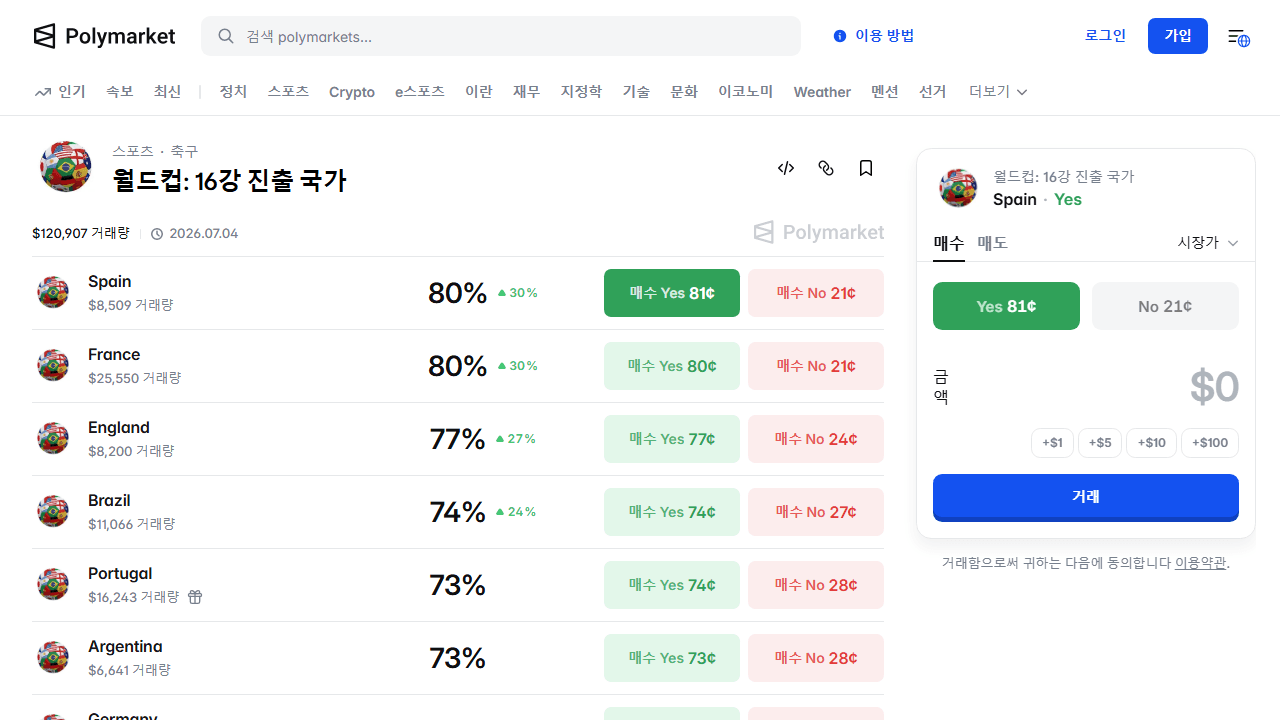
What the Polymarket market asks
The market is structured around national teams. Each listed country has a Yes/No style question tied to whether that team reaches the 2026 FIFA World Cup Round of 16.
The important part is the target stage. In the old 32-team World Cup format, group advancement sent a team directly into the Round of 16. In 2026, group advancement sends a team into the Round of 32.
A reach Round of 16 price should include two steps: the chance the team reaches the Round of 32, and the chance the team wins its Round of 32 match.
| Phrase | Meaning in 2026 |
|---|---|
| Advance from group | Reach the Round of 32. |
| Reach Round of 16 | Reach the last 16 teams after winning a Round of 32 match. |
| Reach quarterfinals | Win in the Round of 16. |
The 2026 format changes the market
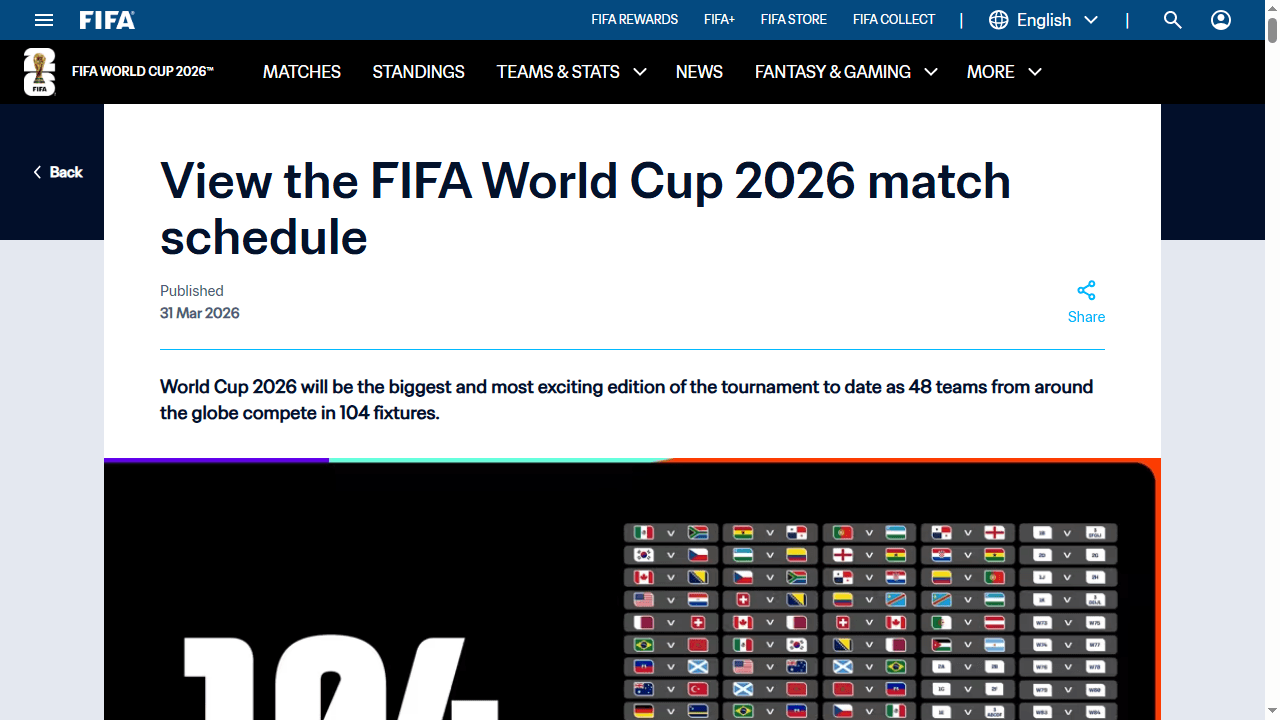
FIFA's 2026 format has 48 teams split into 12 groups of four. Each team plays three group matches. The top two teams in every group advance, and the eight best third-place teams join them in the Round of 32.
That format creates a two-layer advancement problem. First, a team must do enough over three group matches to reach the Round of 32. Then it must win its first single-elimination match.
A strong team in an easy group can have a high chance to reach the Round of 32. That does not make the Round of 16 price automatic. The team still needs to survive a knockout match, and the opponent can vary based on group position and the third-place qualification matrix.
How to decompose a Round of 16 price
Read the price as a two-part probability: chance to reach Round of 16 equals chance to reach Round of 32 multiplied by chance to win the Round of 32 match. Suppose a team has a 90% chance to reach the Round of 32. If it has a 65% chance to win its Round of 32 match, the combined Round of 16 probability is 0.90 x 0.65, or roughly 59%.
Now take a deeper favorite. If a team has a 95% chance to reach the Round of 32 and a 78% chance to win the Round of 32 match, the combined probability is 0.95 x 0.78, or roughly 74%.
The lesson is simple: high group safety still leaves knockout risk. A clean-looking 80% Round of 16 price is much more demanding than an 80% group advancement price.
What to check before trusting the price
Before treating a Polymarket Round of 16 price as useful, check the same market mechanics every time. The market page matters. The order book matters more.
If a page shows 74% but the buy price is 78 cents and the sell price is 70 cents, I do not call that a clean 74% signal. I call it a market with a visible spread.
| Check | Why it matters |
|---|---|
| Exact market question | Reach Round of 16 is different from advance from group. |
| Current Yes and No prices | The displayed percentage may hide the executable price. |
| Liquidity | Thin liquidity can make a price look more stable than it is. |
| Bid-ask spread | A wide spread can distort the implied probability. |
| Market volume | Old volume does not guarantee current depth. |
| Resolution rules | The payout depends on the contract wording. |
| FIFA source | FIFA controls official tournament facts and match results. |
| Timing | Prices can move after every match, lineup, injury, and tiebreak change. |
Third place matters more in 2026 than it did in most World Cup cycles. Eight of the 12 third-place teams reach the Round of 32. That gives a weaker team more paths to stay alive and creates messy incentives in final group matches.
For Round of 16 markets, third place creates a second problem. A third-place qualifier can reach the Round of 32 and still draw a much stronger opponent. That path can lower the chance of reaching the Round of 16 even when the chance of group survival looks decent.
| Team path | Round of 16 pricing issue |
|---|---|
| Likely group winner | Needs opponent-path analysis, not just team strength. |
| Likely runner-up | Often faces a harder first knockout match. |
| Possible third-place qualifier | Group survival and Round of 32 opponent risk both matter. |
| Longshot | Liquidity and stale pricing can dominate the signal. |
A favorite can have a high chance to win or qualify from its group and still trade lower in a Round of 16 market. That does not mean traders dislike the team. It may mean the market is pricing the extra knockout match.
A team can qualify early and rotate in match three. A runner-up path can create a difficult Round of 32 opponent. A favorite can depend on one key forward or goalkeeper. A penalty shootout can turn a strong matchup into a volatile event. A wide spread can make the displayed price look softer than the true trading range.
This is why Round of 16 markets belong closer to bracket-path analysis than group-stage previews.
Round of 16 prices should move when traders update either side of the two-step path. The main drivers include confirmed squads, injuries, suspensions, starting lineups, group-stage results, goal difference, third-place table pressure, likely Round of 32 opponent, travel and rest gaps, venue and weather conditions, and liquidity entering or leaving the order book.
Some moves come from football information. Others come from market structure. A large order in a thin contract can move the displayed probability without proving that the underlying chance changed. That distinction matters.
The Polymarket World Cup Round of 16 market is useful because it forces two questions into one price: can the team survive the group stage, and can it win its first knockout match? That makes the market more informative than a simple advancement table. It also makes the market easier to misread.
Read the price as a bracket-path probability. Then check liquidity, spread, rules, and FIFA format. If those pieces do not line up, the displayed percentage deserves less weight.
Educational content only. It is not financial, betting, legal, or tax guidance. Verify live platform terms, market rules, liquidity, and official FIFA facts before relying on any price.
Check these official Polymarket sources before you act on referral terms, deposit methods, fees, availability, verification, or resolution details.
Last verified: Jun 5, 2026
Use Predicts.guru to review market activity, liquidity context, and trader behavior before treating a price as signal.
Check the live Polymarket World Cup hub for current prices, rules, and market availability.
Tools and related reading referenced by this guide.
Continue with nearby Polymarket research topics.
Learn how Polymarket World Cup odds work: implied probability, liquidity, bid-ask spreads, resolution rules, and checks before relying on a market price.
Learn how to read Polymarket World Cup 2026 group winner markets, implied probabilities, liquidity, spreads, FIFA rules, and Group A-L odds.
Compare World Cup 2026 prediction markets across Polymarket, Kalshi, and sportsbooks. Learn how pricing, liquidity, access, regulation, and exits differ.