
Polymarket World Cup 2026 Group Winner Markets
Learn how to read Polymarket World Cup 2026 group winner markets, implied probabilities, liquidity, spreads, FIFA rules, and Group A-L odds.
Polymarket World Cup group winner markets ask which team will finish first in a specific 2026 World Cup group. The price is a market signal, not a guarantee. Read it with fixture order, FIFA tiebreak rules, team rotation risk, liquidity, bid-ask spread, and the exact resolution wording for that group.
- A group winner market is not the same as an advance-from-group market, especially in the expanded 2026 format.
- Group prices can move faster than the outright winner market because one match can flip the path.
- Check FIFA schedule and tiebreak rules beside Polymarket liquidity, spread, and market wording before trusting the odds.
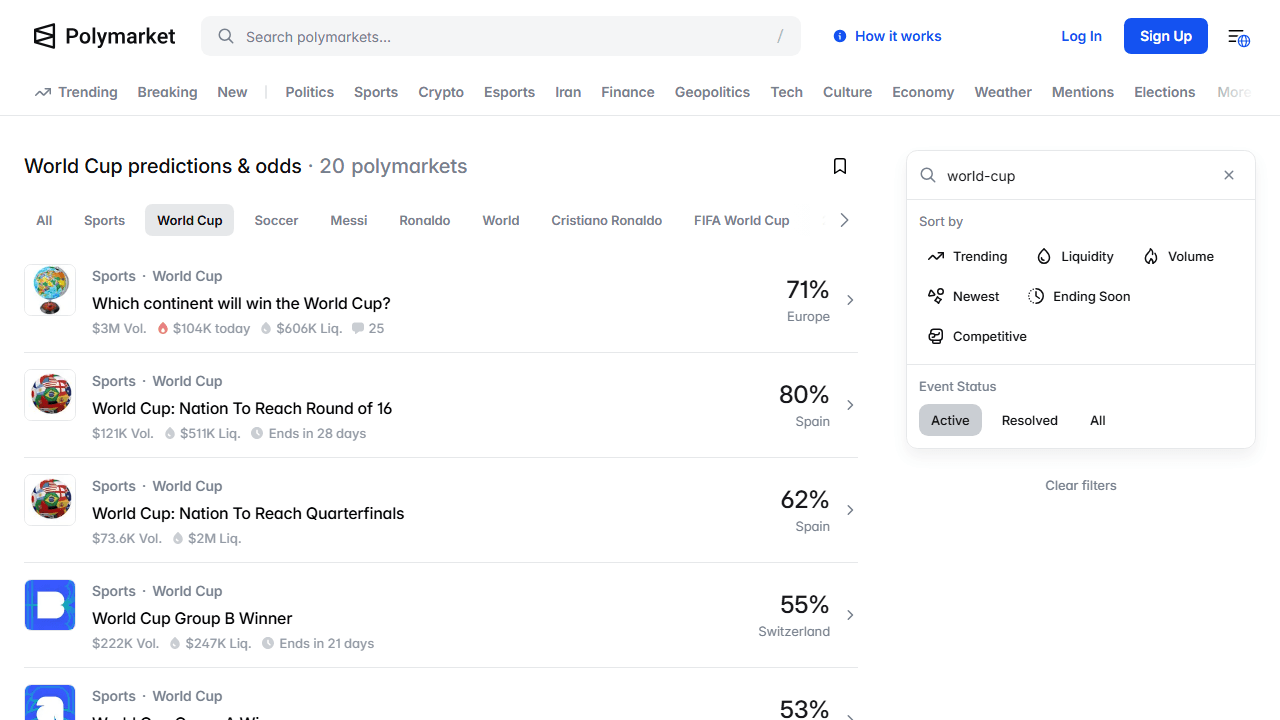
What are Polymarket World Cup group winner markets?
A group winner market prices the chance that one team finishes first in its World Cup group.
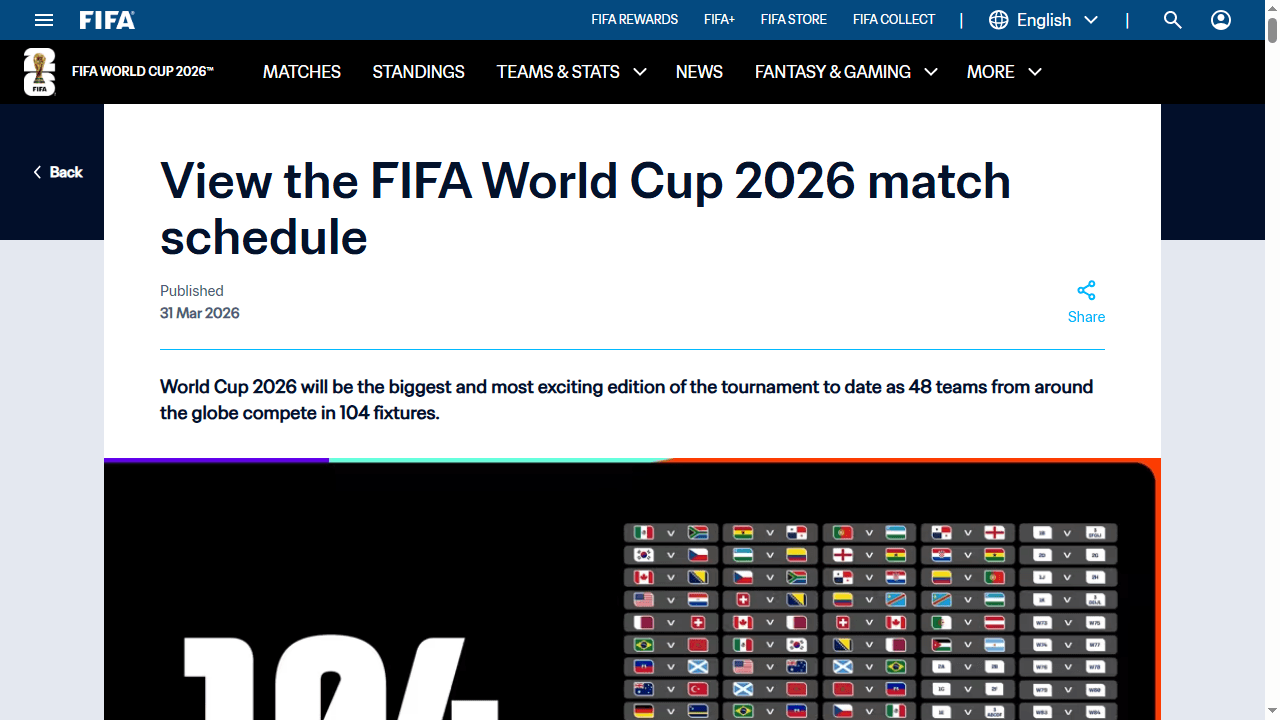
In 2026, the World Cup uses 12 groups of four teams. FIFA's tournament format sends the top two teams in each group, plus the eight best third-place teams, into the Round of 32. That matters because win the group and advance from the group are different markets.
A team can have a strong chance to advance but a weaker chance to win the group. A favorite can qualify after two matches and rotate in the third. A challenger can win the group because the fixture order gives it an easier final match.
Official FIFA schedule and format details should be the first source for the tournament structure, not a market page or a social post.
How to read a group winner price
Polymarket prices map roughly to implied probability. A team priced around 55 cents is being valued near a 55% chance to win the group before fees, spread, slippage, and liquidity.
That does not mean the team has a true 55% chance. It means traders are willing to transact around that price at that moment. If I cannot answer the basic market checks, I do not trust the headline percentage.
| Check | Why it matters |
|---|---|
| Exact market question | Win Group B is not the same as advance from Group B. |
| Current price | Prices can move after injuries, lineups, weather, and match results. |
| Liquidity | A price with weak depth may not support a real position. |
| Bid-ask spread | A wide spread can make the displayed percentage misleading. |
| Resolution rules | FIFA standings and tiebreaks should control the outcome. |
Why group markets can move faster than the winner market
The outright World Cup winner market absorbs every tournament variable: squad quality, knockout path, injuries, form, penalty variance, travel, and draw structure.
Group winner markets have a shorter fuse. One result can move the entire market. A red card, a rotated lineup, a travel spot, or a tiebreak swing can matter more in a three-match group than it would in a full tournament forecast.
Group markets can become useful research signals because the event resolves sooner, the number of teams is smaller, fixture order is known, tiebreak pressure is visible after each matchday, and liquidity can concentrate around favorites and close two-team races. The tradeoff is that some group markets may be thinner than the headline winner market. A clean-looking 62% price can still be fragile if the order book has little depth behind it.
Group A-L: what to check before trusting the odds
Do not read all 12 groups the same way. Each group has its own pricing problem. The best group analysis should explain why the market price exists. A bare list of current favorites is not enough.
| Group type | What to watch |
|---|---|
| Host-country group | Home pressure, travel comfort, crowd effect, and inflated public demand. |
| One heavy favorite | Rotation risk if the favorite qualifies early. |
| Two-team race | Spread and liquidity matter because one match can flip the favorite. |
| Balanced group | Tiebreak rules and goal difference matter earlier. |
| Longshot-heavy group | Thin liquidity can make the board look more certain than it is. |
| Playoff-team group | The market may reprice when the final team is confirmed. |
The expanded 2026 format creates a new tension. A team can play for a draw if third place looks enough to advance, while another team may still need first place to improve its knockout path. That creates two separate price layers: the market's price for winning the group, and the football incentive to push for first place.
Those layers can diverge. A team may have a high chance to advance and a lower incentive to chase top spot in the final group match. That matters when you read late group winner prices.
FIFA's group qualification and tiebreak rules should sit beside the Polymarket chart. I would not analyze a group market without both.
A good preview tells you which teams look strong. The market rules tell you what gets paid.
For group winner markets, check whether the market resolves based on official FIFA group standings. Then check edge cases such as postponed matches, abandoned matches, tiebreak changes, disciplinary points, FIFA rulings, schedule changes, and whether the market waits for official confirmation.
Most readers skip this because it feels boring. That is where mistakes start. The exact market wording controls the outcome.
Use Predicts.guru to read group winner prices with more context than a simple odds table gives you. Check the live market, then compare the fixture order, liquidity, spread, current favorite, main challenger, and the rule details that can move the price.
This matters more once the group stage starts. One result, red card, injury, or rotation decision can change the path faster than the outright World Cup winner market.
A useful World Cup group winner view needs more than a thin odds table. Start with the market question, then check the group path, FIFA rules, liquidity behind the price, and the reasons the number can move.
The headline percentage tells you where traders are today. The edge in understanding comes from checking whether that price has enough structure behind it.
Educational content only. It is not financial, betting, legal, or tax guidance. Verify live platform terms, market rules, liquidity, and official FIFA facts before relying on any price.
Check these official Polymarket sources before you act on referral terms, deposit methods, fees, availability, verification, or resolution details.
Last verified: Jun 5, 2026
Use Predicts.guru to review market activity, liquidity context, and trader behavior before treating a price as signal.
Check the live Polymarket World Cup hub for current prices, rules, and market availability.
Tools and related reading referenced by this guide.
Continue with nearby Polymarket research topics.
Learn how Polymarket World Cup odds work: implied probability, liquidity, bid-ask spreads, resolution rules, and checks before relying on a market price.
Learn how to read Polymarket World Cup 2026 Round of 16 markets, why they differ from group advancement odds, and what to check before trusting a price.
Compare World Cup 2026 prediction markets across Polymarket, Kalshi, and sportsbooks. Learn how pricing, liquidity, access, regulation, and exits differ.