
How to Bet on Polymarket: Yes/No Shares, Prices, and Market Research
Learn how betting on Polymarket works through Yes/No shares, prices, probability, liquidity, order books, settlement, and trader research.
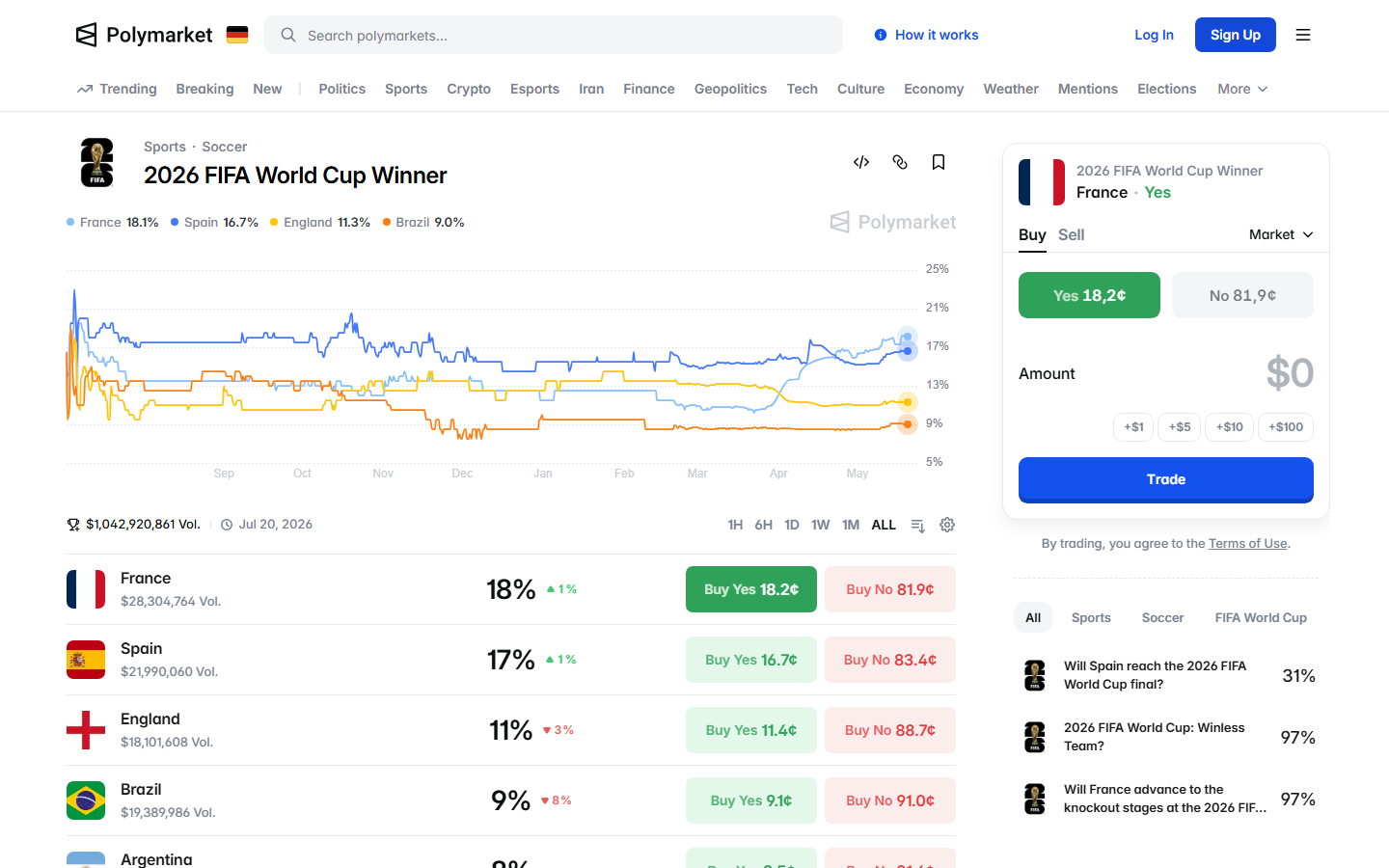
To bet on Polymarket, choose a market, read the resolution rules, decide whether Yes or No is mispriced, review liquidity and spread, then use the trade ticket to buy shares at a price you accept. The price acts like a probability signal, but it is not a guarantee.
- A Yes or No price reflects what traders are willing to pay, not a promise about the outcome.
- Liquidity and spread matter before you buy or sell.
- Use event analytics and top-wallet data before copying a position.
Why price looks like probability
A share price can be read as a market-implied probability because traders are expressing what they will pay for an outcome. Polymarket says displayed prices usually reflect the midpoint of the bid-ask spread, unless the spread is wider than 10 cents. Your fill can differ from the displayed probability when the order book is thin.
What to check before a first trade
Check liquidity, spread, fees, rules, recent activity, and top-wallet behavior. These signals help you avoid entering only because a price looks attractive. Use Polymarket's event page first, then add Predicts.guru event analytics and leaderboards to understand who is active in the market.
A Polymarket bet is a trade in Yes or No shares. Before confirming, check side, amount, estimated shares, average price, fees if shown, and the maximum you can lose.
The number that matters is the actual fill, not the displayed probability alone. Thin order books can make a larger order worse than the visible headline price.
Before buying, write one sentence that explains why the current price is wrong. The sentence should mention the event, the rule, and the reason you think other traders mispriced it. If you cannot write that sentence, you are reacting to movement rather than placing a researched trade.
Crossing the spread gets you into the market faster, but it can cost more. Waiting with a limit order may improve entry, but the market can move away.
Pick the method that fits the thesis. If the thesis depends on urgent news, speed may matter. If the thesis depends on value, price discipline matters more.
After the trade, monitor price movement, new information, liquidity, and whether the resolution rules still match your thesis. Decide in advance whether you will sell before resolution or hold through payout.
Do not let a winning position become unmanaged. A Yes share that moves from $0.35 to $0.70 still carries downside if the market has not resolved.
Polymarket's docs say every order is technically a limit order. A market order is a limit order priced to execute right away against resting liquidity. That detail matters for beginners because "instant buy" still depends on the asks available in the book.
If you use the consumer interface, you may not think in API order codes. Still, the mechanics explain why partial fills, unfilled orders, and worse-than-expected average prices can happen.
| Code | Name | Plain-English meaning |
|---|---|---|
| GTC | Good-Til-Cancelled | Rests on the book until filled or cancelled |
| GTD | Good-Til-Date | Expires at a specified time |
| FOK | Fill-Or-Kill | Must fill entirely right away or cancel |
| FAK | Fill-And-Kill | Fills available size now and cancels the rest |
Pick markets where you can explain the rule, the information source, and the reason the current price may be wrong. Skip markets where your only reason is that the payout looks large. A good first bet usually has clear rules, visible liquidity, a modest position size, and a reason to monitor the market after entry.
Increase the order amount in the ticket and watch whether the average price changes. If a small size gets a fair price but your intended size moves the fill sharply, split the plan or reduce size.
This check matters because Polymarket prices can look simple while the order book controls execution. Your bet begins at the filled price, not at the headline probability.
If your account has $200, a $5 or $10 first trade teaches more than a $75 position. You can practice entry, monitoring, partial exit, and resolution without turning one opinion into the whole account.
Small sizing also makes mistakes cheaper. A wrong-side click, vague market rule, or thin exit becomes a lesson rather than a portfolio problem.
Write the price where you would take profit, the fact pattern that would make you exit, and whether you plan to hold through resolution. Make that note before the trade fills.
Once the position moves, emotion changes the decision. A written exit rule gives you a way to judge the trade instead of judging your mood.
When new information hits, compare it with the market rule before trading again. Some news changes probability; some news does not matter because the rule depends on a specific source or date.
Check the activity feed after major news. If large wallets entered before the move, your available price may already include most of the information.
After you sell or the market resolves, compare the fill price, exit price, thesis, rule reading, and position size. Mark whether the result came from good analysis, poor execution, or luck.
This review turns a first Polymarket bet into a learning loop. It also gives you language for the next trade: what you will repeat, what you will change, and what market types you will avoid.
Check these official Polymarket sources before you act on referral terms, deposit methods, fees, availability, verification, or resolution details.
Last verified: May 20, 2026
Review rules, price movement, liquidity, and trader activity.
Review current platform details directly on Polymarket before you trade.
Tools and related reading referenced by this guide.
Continue with nearby Polymarket research topics.
Learn how to use Polymarket from signup to research, deposits, market selection, Yes/No shares, position tracking, and risk checks.
Understand Polymarket fees, including taker fees on some markets, fee-free categories, deposit and withdrawal notes, spreads, and liquidity costs.
A beginner explanation of Polymarket, prediction markets, Yes/No shares, market-implied probabilities, resolution, and how to research events.