
What Is Polymarket? Prediction Markets, Prices, and Event Outcomes
A beginner explanation of Polymarket, prediction markets, Yes/No shares, market-implied probabilities, resolution, and how to research events.
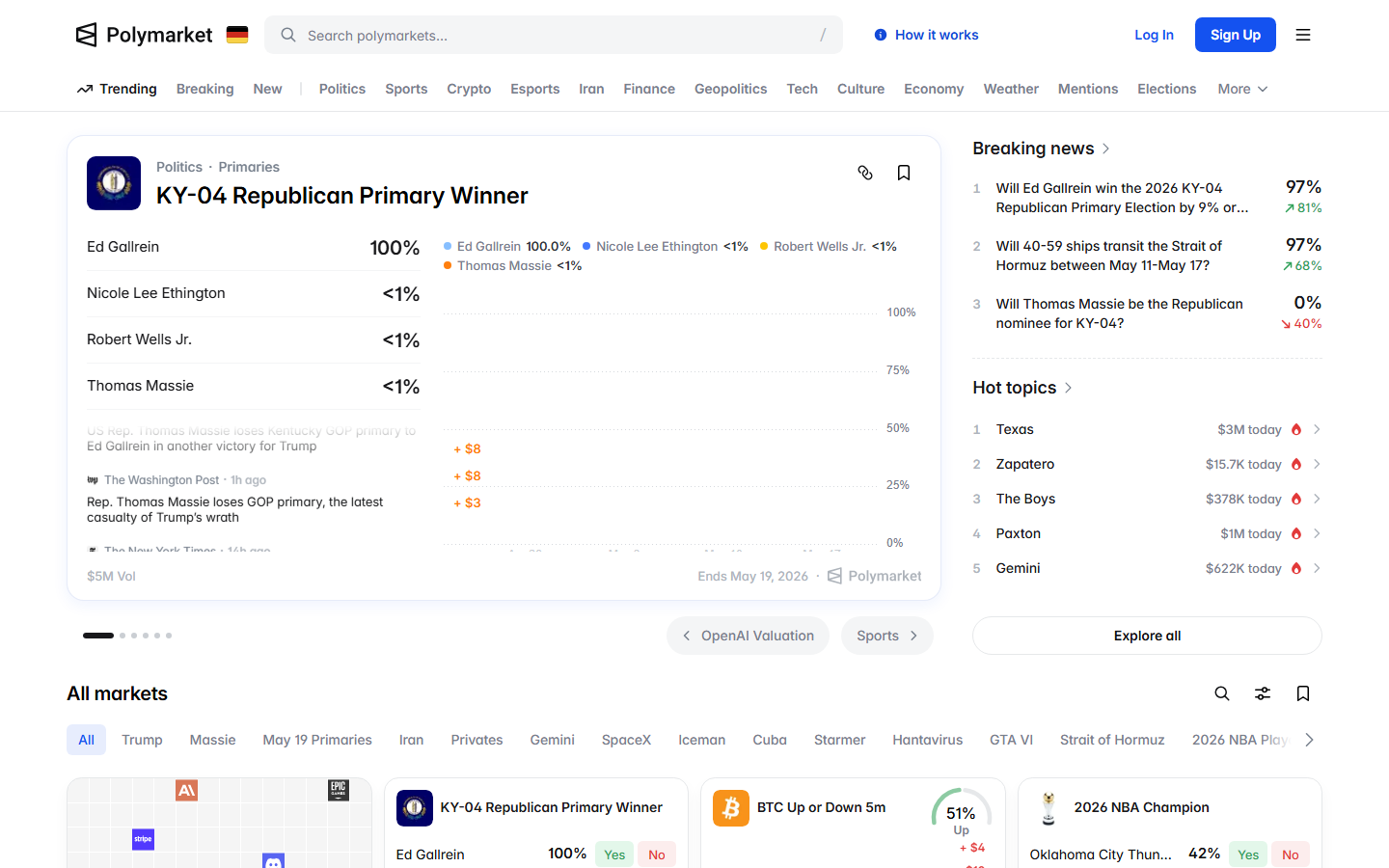
Polymarket is a prediction market where users trade shares tied to real-world event outcomes. Yes and No shares trade between $0.00 and $1.00, and the correct final outcome can pay out at $1.00 per share. Users trade against other market participants, so research, liquidity, and resolution rules matter before any trade.
- Polymarket prices come from traders buying and selling event outcomes.
- Prices can look like probabilities, but markets can still be wrong.
- Predicts.guru helps you inspect events, top traders, and wallet performance before trading.
Prediction markets in plain English
A prediction market lets users trade on event outcomes. On Polymarket, traders buy and sell shares tied to whether an event resolves a certain way.
The market price changes as traders update their views and place orders. A pair of opposing outcome shares is collateralized, and the winning side receives the payout when the market resolves.
Why prices matter
Prices are useful because they aggregate trader opinions and capital. A higher Yes price means traders are paying more for that outcome.
A price is still only a market signal. Check bid, ask, spread, liquidity, and resolution rules before treating a displayed percentage as an entry price.
How to use analytics before trading
Use Predicts.guru to inspect events, top traders, wallet histories, and activity before entering a position. Analytics can help you compare markets and avoid trading only from a headline.
Polymarket is not a sportsbook ticket with fixed odds after purchase. It is a market where users buy and sell event shares while prices move. You can enter, exit, and change exposure if liquidity exists.
It is also not a poll. Prices reflect money placed by traders, and traders can be wrong, biased, hedged, or reacting to incomplete information.
A $0.64 Yes price can be read as a market-implied signal near 64 percent, but your exact fill depends on the order book. The displayed price and the tradable price can differ. This distinction helps beginners avoid the first major misunderstanding: probability language explains the market, while the order ticket controls the trade.
Every market needs a final answer. Polymarket documents a resolution process that determines which side wins and which shares can redeem.
Read the resolution wording before you buy. A market can have a simple headline and a complicated rule, especially around dates, sources, or edge cases.
Open one live event page, one activity view, and one wallet profile. That combination shows the market question, recent trader behavior, and how a wallet manages positions. You will understand Polymarket faster from one complete example than from scanning many market cards.
A Polymarket card looks like one question with Yes and No buttons, but the docs describe a market as a CTF condition with question and token identifiers. A normal reader does not need those IDs to trade, but they explain why analytics tools can connect events, wallets, tokens, and resolution data.
This is also why a market URL slug is useful for research. You can use the public-facing slug to find the event, then use token and condition data for deeper tracking.
| Identifier | What it means |
|---|---|
| Condition ID | Unique market condition in CTF contracts |
| Question ID | Hash of the market question used for resolution |
| Token IDs | ERC1155 outcome token IDs, one for Yes and one for No |
| Slug | Human-readable event URL handle |
You will see markets, events, outcomes, shares, price, spread, volume, liquidity, resolution, and redemption. These words matter because they describe the actual mechanics behind a simple Yes or No question.
A market asks the question. Outcomes are the possible answers. Shares represent exposure to those answers. Resolution decides which side receives the final payout.
Suppose a market asks whether an event will happen before a specific date. If Yes trades at $0.40, traders are pricing that side near 40 percent before execution details.
If you buy Yes and the market resolves Yes, each winning share can redeem for $1.00. If the event does not meet the rule, that Yes share becomes worthless.
The order book shows available bids and asks. It decides whether you can enter or exit near the displayed price, especially when you trade more than a tiny amount.
A market can show a clear probability and still have poor execution. Liquidity turns a readable market into a tradable market.
Prediction markets need a rule for deciding the final outcome. Polymarket's help content says markets resolve according to predefined rules, and winning shares receive $1 per share after resolution.
That rule can matter more than your opinion about the real-world event. Read it before treating any price as an opportunity.
You can use Polymarket prices as a public signal even if you do not trade. Researchers, journalists, and analysts often care about how expectations move after news.
Wallet and activity data add context. They show whether a move came from broad participation, a few large wallets, or thin market depth.
Spend the first hour reading one market in full, one related activity feed, and one wallet profile. Write down the market question, the current price, the rule, and the biggest risk. This gives you a working model of Polymarket without pretending that every category behaves the same way.
Polymarket works because traders disagree about probability, timing, sources, and price. One trader may think a market is underpriced because they trust a data source. Another may sell because the resolution wording is narrower than the headline.
That disagreement creates the order book. It also explains why prices can move before mainstream coverage catches up, and why a public signal can still be wrong.
Polymarket is best understood as a live marketplace for event outcomes. Users trade shares, prices move with supply and demand, and final resolution determines which side can redeem.
Check these official Polymarket sources before you act on referral terms, deposit methods, fees, availability, verification, or resolution details.
Last verified: May 20, 2026
See live markets and compare event activity.
Review current platform details directly on Polymarket before you trade.
Tools and related reading referenced by this guide.
Continue with nearby Polymarket research topics.
Learn how to use Polymarket from signup to research, deposits, market selection, Yes/No shares, position tracking, and risk checks.
Learn how betting on Polymarket works through Yes/No shares, prices, probability, liquidity, order books, settlement, and trader research.
Understand Polymarket availability questions, jurisdiction restrictions, user responsibility, risk checks, and what to verify before using the platform.