¿Cómo gana dinero Polymarket? Comisiones, incentivos y el modelo de negocio explicados
Descubre cómo gana dinero Polymarket: mercados con comisiones, reembolsos de maker, incentivos de liquidez, comisiones de builder e infraestructura.
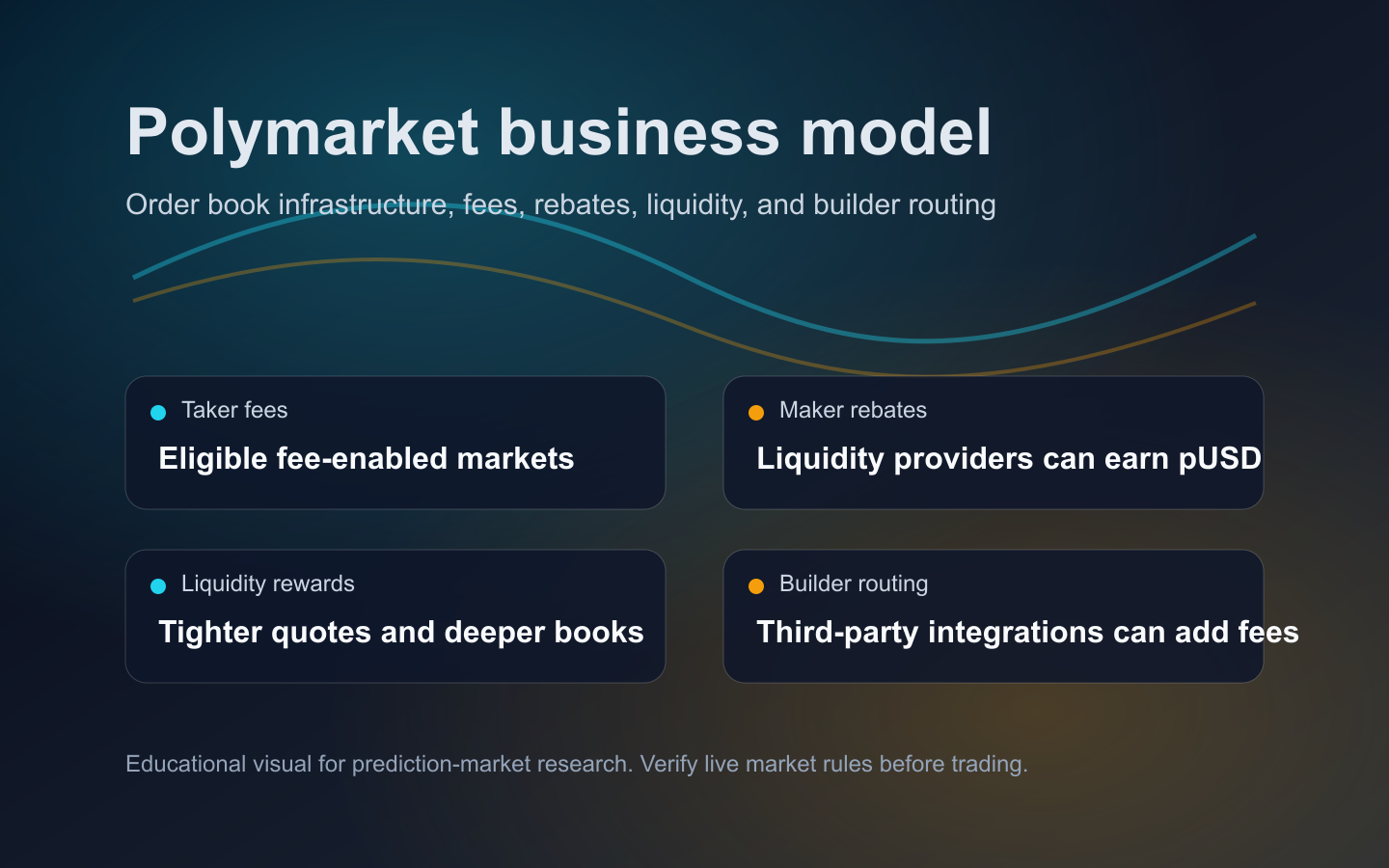
Polymarket tiene un único mecanismo de comisión de plataforma confirmado: comisiones de taker en los mercados elegibles con comisiones habilitadas. No funciona como una casa de apuestas que toma el otro lado de tu apuesta. Los usuarios operan con otros usuarios a través de un libro de órdenes, mientras Polymarket aporta la infraestructura de mercado, la liquidación, las API, los programas de liquidez y las herramientas para builders.
- Fuente de comisiones confirmada: comisiones de taker en ciertos mercados.
- Sin comisión de plataforma para makers: los makers aportan liquidez y pueden ganar reembolsos.
- Categorías sin comisiones: la documentación de Polymarket incluye los mercados de geopolítica y de eventos mundiales como libres de comisiones.
- Incentivos: las comisiones de taker ayudan a financiar los reembolsos de maker y los programas de reembolso para takers.
- No divulgado: Polymarket no publica sus ingresos totales, los ingresos por comisiones retenidos ni su rentabilidad.
¿Cómo gana dinero Polymarket?
Polymarket tiene un único mecanismo de comisión de plataforma confirmado: comisiones de taker en los mercados elegibles con comisiones habilitadas. No funciona como una casa de apuestas que toma el otro lado de tu apuesta. Los usuarios operan con otros usuarios a través de un libro de órdenes, mientras Polymarket aporta la infraestructura de mercado, la liquidación, las API, los programas de liquidez y las herramientas para builders.
Para los traders, la clave es simple: las comisiones, los reembolsos, las recompensas de liquidez, los spreads y las clasificaciones pueden cambiar lo atractivo que parece un mercado.
- Fuente de comisiones confirmada: comisiones de taker en ciertos mercados.
- Sin comisión de plataforma para makers: los makers aportan liquidez y pueden ganar reembolsos.
- Categorías sin comisiones: la documentación de Polymarket incluye los mercados de geopolítica y de eventos mundiales como libres de comisiones.
- Incentivos: las comisiones de taker ayudan a financiar los reembolsos de maker y los programas de reembolso para takers.
- No divulgado: Polymarket no publica sus ingresos totales, los ingresos por comisiones retenidos ni su rentabilidad.
Polymarket es infraestructura de mercado, no una casa de apuestas
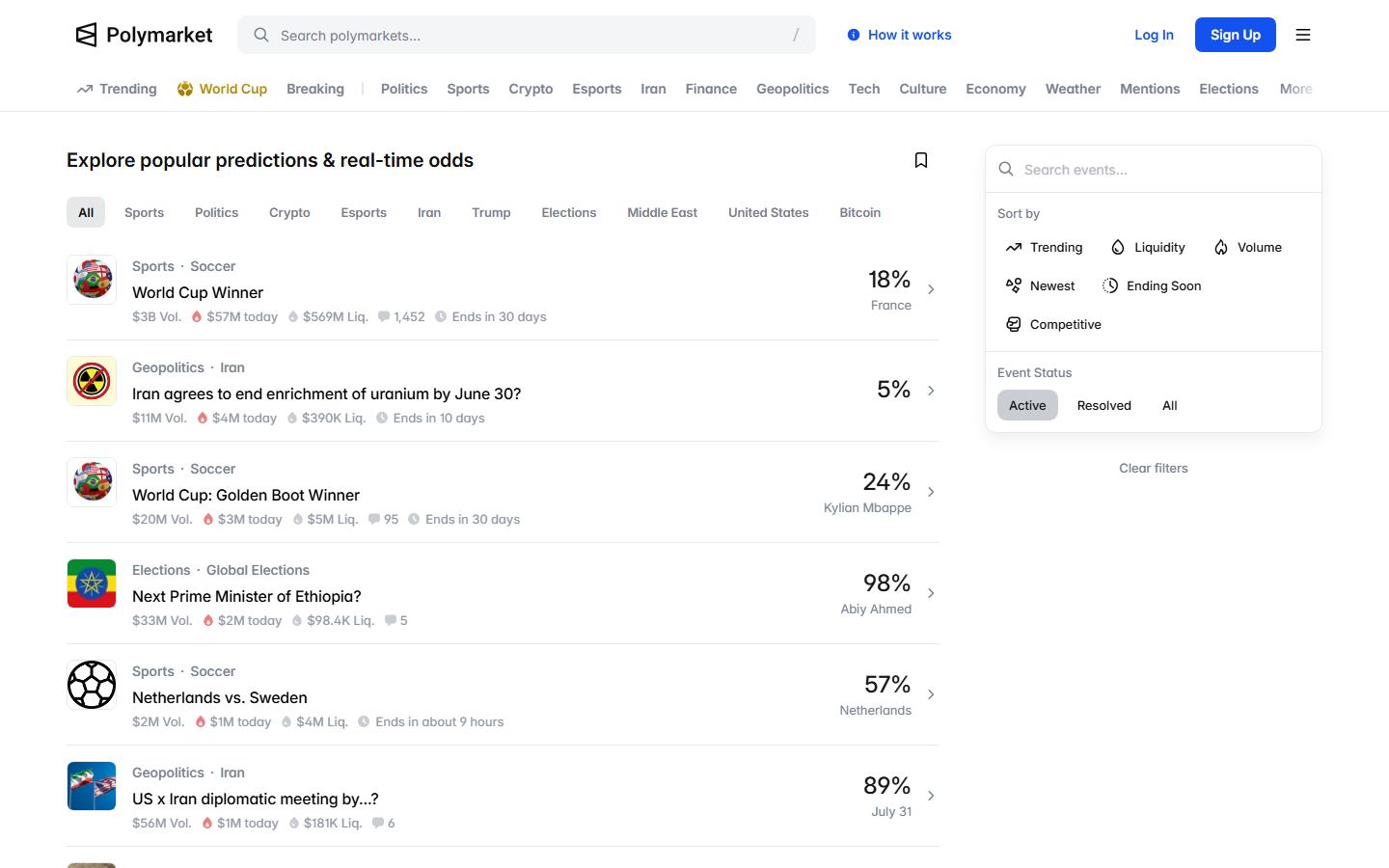
Polymarket puede parecer una app de apuestas porque sus mercados plantean preguntas sobre elecciones, deportes, cripto, economía, clima y noticias. Su mecánica se parece más a la de un exchange.
La propia documentación de Polymarket 101 dice que los usuarios operan acciones de resultado con otros usuarios en un mercado abierto entre pares. Su documentación de Prices & Orderbook indica que Polymarket usa un Central Limit Order Book, o CLOB, donde los precios surgen de la oferta y la demanda entre traders.
Esa diferencia importa para el modelo de negocio. Una casa de apuestas puede ganar mediante las cuotas, el margen, los límites y la gestión del libro. Polymarket gana en torno a la infraestructura de trading y la actividad del ecosistema: mercados con comisiones habilitadas, órdenes enrutadas por builders, incentivos de liquidez, programas para creadores de mercado y el crecimiento general del volumen.
Un precio de Polymarket también necesita contexto. Una acción SÍ a $0.65 sugiere una probabilidad implícita del mercado cercana al 65%, pero puede que no se ejecute en el punto medio mostrado. Pagas el ask al comprar y recibes el bid al vender. Revisa la pregunta exacta del mercado y la fuente de resolución antes de tomar cualquier precio como útil.
| Pregunta | Casa de apuestas tradicional | Polymarket |
|---|---|---|
| ¿Quién toma el otro lado? | A menudo el operador | Otros usuarios |
| ¿Quién fija el precio? | La casa de apuestas | El libro de órdenes |
| Costo principal para el usuario | Margen en las cuotas, límites o comisiones explícitas | Spread, posible comisión de taker, posible comisión de builder |
| Rol principal del operador | Casa de apuestas | Infraestructura de mercado |
| Qué deben revisar los traders | Ventaja de la casa y límites | Estado de comisiones, spread, profundidad, resolución, incentivos |
¿Polymarket cobra comisiones?
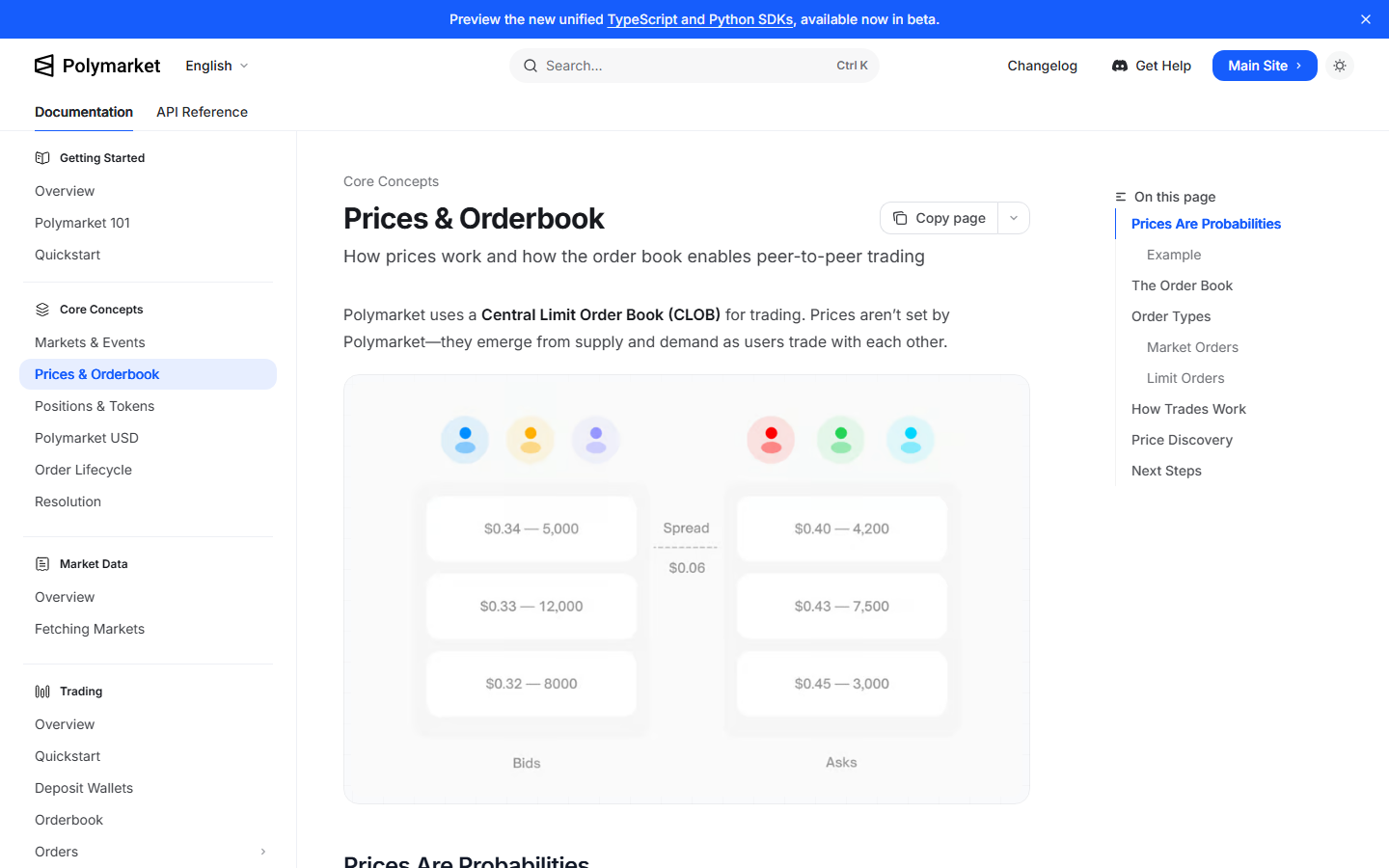
Sí, Polymarket cobra comisiones de taker en ciertos mercados. Su documentación de comisiones indica que las comisiones se aplican en el momento del match, varían según el mercado y aparecen en los mercados donde `feesEnabled` está fijado en `true`. La misma documentación establece varios límites que los traders deberían entender:
Un taker es el trader cuya orden se ejecuta contra la liquidez en reposo. Si colocas una orden que se ejecuta de inmediato, normalmente tomas liquidez. Un maker coloca una orden límite que espera en el libro hasta que otro trader la ejecuta.
Ejemplo: compras 100 acciones de resultado en un mercado de cripto con comisiones habilitadas usando una orden que se ejecuta al instante. Eres el taker y puedes pagar una comisión de taker. Otro trader colocó el ask en reposo que ejecutaste. Ese trader actuó como maker y no paga ninguna comisión de plataforma de maker según la documentación actual.
Eso significa que la respuesta precisa a «¿Polymarket cobra comisiones?» es: sí, en los mercados elegibles, principalmente mediante comisiones de taker. No significa que todos los mercados tengan comisión ni que todos los traders paguen la misma comisión.
- Los makers no pagan ninguna comisión de trading de la plataforma Polymarket según la estructura de comisiones documentada.
- Solo los takers pagan la comisión de taker de la plataforma.
- Los mercados de geopolítica y de eventos mundiales están libres de comisiones.
- Polymarket dice que no cobra comisiones por depósito ni retiro de USDC, aunque intermediarios como exchanges o proveedores de on-ramp pueden cobrar sus propias comisiones.
- La configuración de comisiones puede diferir según la categoría y el mercado.
Cómo funciona la fórmula de comisión de taker de Polymarket
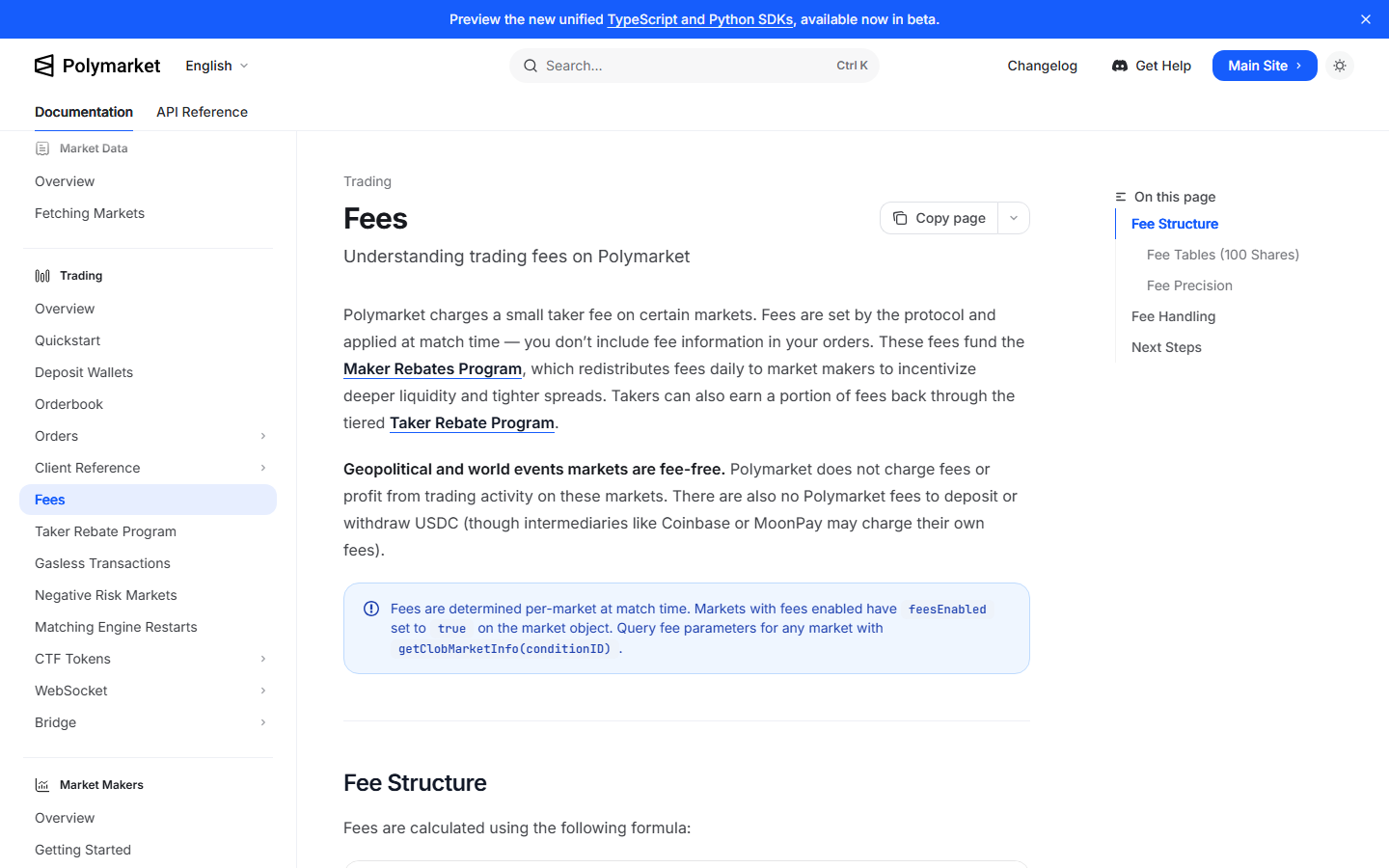
La fórmula de comisiones de Polymarket es: `fee = C × feeRate × p × (1 - p)` Donde:
La forma de la fórmula importa. Las comisiones alcanzan su máximo cerca del 50% de probabilidad y se reducen a medida que los precios se acercan al 0% o al 100%. La documentación de Polymarket muestra, por ejemplo, que una operación de 100 acciones de resultado en Finance, Politics, Mentions o Tech con una tasa de comisión de 0.04 tiene una comisión de $1.00 a $0.50 y una comisión de $0.36 a $0.90.
Usando la misma tasa hipotética de comisión de 0.04: La operación cerca de los 50 centavos cuesta más porque la incertidumbre es mayor en la fórmula. Antes de dimensionar una operación, revisa si el mercado tiene comisiones habilitadas y qué tasa de categoría se aplica.
- `C` es el número de acciones de resultado operadas.
- `feeRate` depende de la categoría del mercado.
- `p` es el precio de la acción de resultado.
- A $0.50: `100 × 0.04 × 0.50 × 0.50 = 1.00`
- A $0.90: `100 × 0.04 × 0.90 × 0.10 = 0.36`
Polymarket no solo cobra comisiones de taker. También redistribuye parte de esas comisiones a los proveedores de liquidez.
La documentación del Programa de Reembolsos para Makers dice que los makers pueden ganar reembolsos diarios en pUSD colocando órdenes que aportan liquidez y que luego se ejecutan. El programa paga según la proporción de liquidez aportada por el maker que fue tomada. El ciclo básico es así:
La documentación indica un mínimo de $1 pUSD de reembolso acumulado para el pago y señala que los porcentajes de reembolso difieren según la categoría. También dice que Polymarket puede cambiar el porcentaje de reembolso con el tiempo.
Para los traders, los reembolsos de maker explican por qué algunos usuarios colocan órdenes ajustadas en lugar de operar de inmediato. Un maker puede aceptar ejecuciones más lentas porque los reembolsos, la captura de spread o la gestión de la posición hacen que la orden valga la pena.
- Un taker se ejecuta contra la liquidez en reposo en un mercado con comisiones habilitadas.
- El taker paga la comisión de taker correspondiente.
- Polymarket destina parte de las comisiones de taker elegibles a los reembolsos de maker.
- Los makers reciben pagos diarios en pUSD si alcanzan el umbral de pago.
Polymarket también gestiona programas de recompensas de liquidez para los creadores de mercado. La documentación de Recompensas de Liquidez dice que los makers son elegibles al colocar órdenes límite en reposo y que las recompensas van a las direcciones de los makers a diario, a medianoche UTC. El programa premia la participación, la profundidad en ambos lados y cotizaciones más ajustadas cerca del punto medio del mercado.
Esto importa porque la liquidez determina el precio que ves. Un mercado con cotizaciones ajustadas en ambos lados podría mostrar: Un mercado débil podría mostrar:
Ambos mercados pueden mostrar un punto medio cercano al 50%, pero no ofrecen la misma experiencia de trading. En el primer mercado, puedes entrar o salir cerca de la probabilidad mostrada. En el segundo, el spread puede comerse gran parte de tu ventaja antes de que el resultado se mueva.
Las recompensas de liquidez de Polymarket favorecen las cotizaciones que mejoran la profundidad y el ajuste del mercado. Eso no hace que todo mercado líquido sea preciso. Significa que debes leer juntos el precio, el spread, la profundidad del libro de órdenes y el volumen.
Predicts.Guru resulta útil aquí porque ayuda a los lectores a comparar mercados de Polymarket con contexto en lugar de tomar la probabilidad principal como una conclusión.
- Mejor bid: $0.49
- Mejor ask: $0.51
- Spread: 2 centavos
- Mejor bid: $0.42
- Mejor ask: $0.58
- Spread: 16 centavos
Polymarket también premia parte de la actividad de los takers. Su documentación del Programa de Reembolsos para Takers dice que el programa se lanzó el 28 de mayo de 2026. Las operaciones de taker generan Weighted Volume, o wV, según el tamaño de la operación, el precio de entrada, el peso de la categoría y cualquier bono que aplique Polymarket.
Tu nivel depende del Weighted Volume de los últimos 30 días. La documentación enumera siete niveles, de Bronze a Obsidian, donde los niveles más altos obtienen reembolsos mayores. Los reembolsos se pagan a diario en pUSD. La insignia de nivel aparece en el perfil del usuario y en las clasificaciones.
Eso crea un incentivo claro: los takers activos pueden operar más para alcanzar o mantener un nivel.
Para quienes leen las clasificaciones, esto es una advertencia. Un volumen alto puede mostrar actividad, compromiso o acceso al mercado, pero no prueba habilidad para operar. Un trader puede subir en las clasificaciones mediante volumen, selección de mercados, farmeo de reembolsos o actividad de corto plazo. Aún necesitas revisar el rendimiento realizado, la calidad de las posiciones, la elección de mercados, el timing y el riesgo.
Una revisión práctica de la clasificación: La documentación de Polymarket también dice que las tasas de reembolso, los umbrales de nivel, los pesos de categoría, los bonos por subir de nivel y los multiplicadores de bono pueden cambiar sin aviso. Trata el puesto en la clasificación como una señal, no como un veredicto.
- ¿El trader gana dinero después de comisiones y spread?
- ¿Opera en mercados líquidos o en mercados poco profundos?
- ¿Opera en categorías con comisiones habilitadas donde los reembolsos importan?
- ¿Entra a buenos precios o persigue ejecuciones?
- ¿Su volumen refleja habilidad o persecución de incentivos?
Las comisiones de builder son distintas de las comisiones de plataforma de Polymarket.
La documentación de Comisiones de Builder de Polymarket dice que los builders pueden ganar comisiones por las órdenes enrutadas a través de sus aplicaciones cuando adjuntan un código de builder. Estas comisiones se suman a las comisiones de plataforma. No las reemplazan.
La documentación describe cuatro casos posibles:
Los límites de las comisiones de builder también importan. La documentación indica una comisión máxima de builder para takers de 100 puntos básicos, o 1%, y una comisión máxima de builder para makers de 50 puntos básicos, o 0.5%. Si operas a través de una interfaz de terceros, revisa si se aplica una comisión de builder.
Para el modelo de negocio de Polymarket, las comisiones de builder muestran una estrategia de ecosistema más amplia. Polymarket puede dar soporte a apps externas, herramientas de trading e interfaces mientras permite que esos builders moneticen el flujo enrutado.
| Estado de comisiones del mercado | Código de builder | El usuario paga |
|---|---|---|
| Sin comisión de plataforma | Sin código de builder | Sin comisión |
| Sin comisión de plataforma | Código de builder adjunto | Solo comisión de builder |
| Comisión de plataforma habilitada | Sin código de builder | Solo comisión de plataforma |
| Comisión de plataforma habilitada | Código de builder adjunto | Comisión de plataforma más comisión de builder |
No. La documentación oficial actual no respalda esa afirmación.
La documentación de comisiones de Polymarket dice que los mercados de geopolítica y de eventos mundiales están libres de comisiones y que Polymarket no cobra comisiones ni obtiene beneficio de la actividad de trading en esos mercados. La misma página dice que las comisiones de taker se aplican en ciertos mercados y financian los reembolsos de maker, mientras que los takers pueden recuperar parte de las comisiones a través del programa de reembolsos para takers. Eso deja tres ideas separadas:
Evita artículos o publicaciones en redes que hagan afirmaciones sin respaldo como «Polymarket gana con cada spread», «todas las operaciones tienen comisiones de transacción» o «las comisiones por creación de mercados son una fuente de ingresos actual confirmada». Un spread suele ser el costo de cruzar el libro de órdenes entre usuarios. No es automáticamente un ingreso de la plataforma.
- Cobro de comisiones documentado: Polymarket cobra comisiones de taker en los mercados elegibles con comisiones habilitadas.
- Redistribución documentada: parte de los ingresos por comisiones financia los reembolsos de maker y los reembolsos para takers.
- Economía de la empresa no divulgada: Polymarket no revela en esta documentación sus ingresos totales, los ingresos por comisiones retenidos, los costos operativos ni su rentabilidad.
El modelo de negocio de Polymarket afecta a más que los ingresos de la empresa. Cambia cómo deberías leer los mercados.
Las comisiones cambian la selección de operaciones
Un mercado con comisiones habilitadas y un spread amplio puede requerir una ventaja de precio mayor antes de que una operación tenga sentido. Si entras al ask, pagas una comisión de taker y luego sales al bid, el mercado debe moverse lo suficiente para cubrir los tres costos.
Los reembolsos cambian el comportamiento de los usuarios
Los makers pueden cotizar más ajustado porque los reembolsos mejoran la economía de aportar liquidez. Los takers pueden operar más porque los niveles y los reembolsos reducen parte del costo efectivo. Ambos incentivos pueden mejorar la actividad del mercado, pero también pueden fomentar un volumen que parece más significativo de lo que es.
La liquidez cambia la calidad del precio
Un mercado al 70% con liquidez profunda, spreads ajustados y volumen constante ofrece una señal más útil que un mercado al 70% con poca profundidad y un spread enorme. El precio por sí solo no te dice lo suficiente.
Las clasificaciones necesitan contexto
Las clasificaciones de Polymarket pueden ayudarte a encontrar traders activos, pero un puesto no equivale a rentabilidad. Revisa si el rendimiento de la cuenta sobrevive a las comisiones, el spread, la volatilidad y el riesgo de resolución del mercado.
El enrutamiento de builders puede añadir costos
Si usas una app, un bot o una herramienta de terceros que enruta órdenes con un código de builder, tu orden puede incluir una comisión de builder. Esa comisión puede aplicarse incluso cuando no hay una comisión de plataforma de Polymarket.
Usa esta lista antes de considerar significativo un mercado, un trader o un puesto de Polymarket: Predicts.Guru puede encajar en este proceso como una capa de analítica neutral. Úsalo para revisar el contexto de los mercados de Polymarket, los spreads, la liquidez, el volumen y las señales de clasificación antes de confiar en un precio o en un perfil.
- Pregunta del mercado: lee la redacción exacta y la fuente de resolución.
- Estado de comisiones: revisa si el mercado tiene comisiones habilitadas.
- Tipo de orden: identifica si estás aportando liquidez como maker o tomando liquidez como taker.
- Spread: compara el mejor bid y el mejor ask, no solo el punto medio mostrado.
- Profundidad: revisa cuánto tamaño puedes operar antes de mover el precio.
- Categoría: las comisiones, los pesos y las recompensas pueden diferir según la categoría.
- Reembolsos: pregúntate si los incentivos de maker o de taker pueden estar impulsando el comportamiento.
- Comisiones de builder: revisa si una app de terceros añade su propia comisión por orden enrutada.
- Contexto de la clasificación: compara volumen, resultados realizados y elección de mercados.
- Timing: confirma si las reglas, los niveles y las tasas de comisión cambiaron desde el artículo o la herramienta que estás leyendo.
¿Polymarket cobra comisiones de trading?
Sí, Polymarket cobra comisiones de taker en ciertos mercados con comisiones habilitadas. Los makers no pagan ninguna comisión de trading de la plataforma Polymarket según la estructura de comisiones documentada. Los mercados de geopolítica y de eventos mundiales aparecen como libres de comisiones en la documentación oficial de comisiones de Polymarket.
¿Qué es una comisión de taker de Polymarket?
Una comisión de taker se aplica cuando tu orden se cruza con la liquidez existente en un mercado elegible con comisiones habilitadas. Si tu orden se ejecuta de inmediato, normalmente actuaste como taker. La comisión depende del número de acciones de resultado, la tasa de comisión del mercado y el precio de la acción de resultado.
¿Los makers de Polymarket pagan comisiones?
La documentación de comisiones actual de Polymarket dice que a los makers no se les cobran comisiones de trading de la plataforma. Los makers colocan órdenes límite en reposo que aportan liquidez al libro. También pueden ganar reembolsos de maker si su liquidez es tomada y el mercado califica.
¿Los reembolsos de maker de Polymarket se pagan en USDC o en pUSD?
La documentación de Maker Rebates y Taker Rebates de Polymarket describe los pagos de reembolsos en pUSD. La página de comisiones también analiza los cálculos de comisiones en términos de USDC. Los traders deberían revisar la documentación actual antes de confiar en la moneda de pago, la tasa o las reglas del programa.
¿Las clasificaciones de Polymarket muestran a los mejores traders?
No por sí solas. Las clasificaciones pueden mostrar traders activos o de alto volumen, y las insignias de nivel pueden reflejar el Weighted Volume de 30 días. No prueban rentabilidad, control de riesgo ni habilidad. Revisa los resultados realizados, la selección de mercados, el timing, las comisiones y el impacto del spread.
¿Las comisiones de builder son lo mismo que las comisiones de Polymarket?
No. Las comisiones de builder se aplican cuando una orden se enruta a través de una app o una integración con un código de builder. La documentación de Polymarket dice que las comisiones de builder se suman a las comisiones de plataforma y no las reemplazan.
Polymarket gana dinero mediante un modelo tipo exchange, con las comisiones de taker en los mercados elegibles como el mecanismo de comisión de plataforma confirmado más claro. La documentación también muestra un sistema de incentivos más amplio: reembolsos de maker, recompensas de liquidez, reembolsos para takers, niveles, comisiones de builder y clasificaciones.
Para los traders, la pregunta útil no es solo «¿cómo gana dinero Polymarket?». La mejor comprobación es si el precio de mercado sobrevive a las comisiones, el spread, la profundidad de liquidez, el riesgo de resolución y el comportamiento impulsado por incentivos. Usa los precios de Polymarket como señales y luego verifica la mecánica del mercado antes de operar o de seguir una clasificación.
Solo contenido educativo. Verifica las reglas vigentes de la plataforma, las comisiones, la disponibilidad y los detalles de resolución de los mercados antes de actuar.
Consulta estas fuentes oficiales de Polymarket antes de actuar según condiciones de referidos, métodos de depósito, comisiones, disponibilidad, verificación o detalles de resolución.
Última verificación: 20 jun 2026
Inspecciona la profundidad del mercado, el spread y la actividad reciente antes de entrar.
Revisa la mecánica de comisiones, los spreads y los costos de trading antes de dimensionar una posición.
Herramientas y lecturas relacionadas citadas en esta guía.
Continúa con temas cercanos de investigación en Polymarket.
Entiende las comisiones de Polymarket: comisiones de taker en algunos mercados, categorías sin comisión, notas de depósito y retiro, spreads y liquidez.
Una mirada realista a ganar dinero en Polymarket: ventaja, liquidez, comisiones, spreads, riesgo de resolución, análisis de carteras y errores de principiante.
Encuentra a los top traders de Polymarket, compara carteras por PnL, volumen, ROI y tasa de acierto, y conoce los riesgos de copiar al smart money.