
Polymarket PnL Tracker: Analyze Wallet Profit, ROI, and Positions
Track Polymarket profit, loss, ROI, open positions, trading history, and wallet performance with Predicts.guru wallet analytics.
A Polymarket PnL tracker helps you review a wallet's profit, loss, ROI, volume, positions, and trading history. Predicts.guru lets you check your own wallet or research another trader before copying their market views. Read PnL with position size, open exposure, and market mix.
- PnL needs context from volume, open positions, and trade count.
- A high win rate can still hide poor risk sizing.
- Use wallet analytics before trusting a trader's public profile.
What PnL tracking tells you
PnL tracking shows profit, loss, ROI, volume, positions, and trading history. These numbers help you understand what a wallet has actually done. The same PnL can mean different things depending on capital used, open positions, number of trades, and whether the wallet concentrated in one market.
- Use ROI to compare wallets of different sizes.
- Use volume to understand how much capital moved through the wallet.
- Use open positions to see risk that has not resolved yet.
Why open positions matter
Open positions can change the picture because unrealized exposure may be larger than realized gains. Review what is still at risk. A wallet can look strong historically while carrying a concentrated current position.
How to compare traders
Compare PnL with volume, trade count, market categories, and win rate. This gives you a fuller view of trader behavior.
Use the leaderboard to find wallets, then use the checker to review details. A wallet with fewer trades can look cleaner than a wallet that takes many small positions, so compare sample size too.
A Polymarket PnL tracker focuses on profit, loss, return, volume, and exposure. It helps you decide whether results came from repeatable performance or from one market outcome.
Read realized and open results together. A wallet can bank gains while holding a current position large enough to change the full picture. This is why a useful tracker should pull both closed-position context and current-position context instead of showing one score.
| Data type | What it helps you inspect |
|---|---|
| Current positions | Open exposure and unresolved risk |
| Closed positions | Realized outcomes that can be reviewed after resolution or exit |
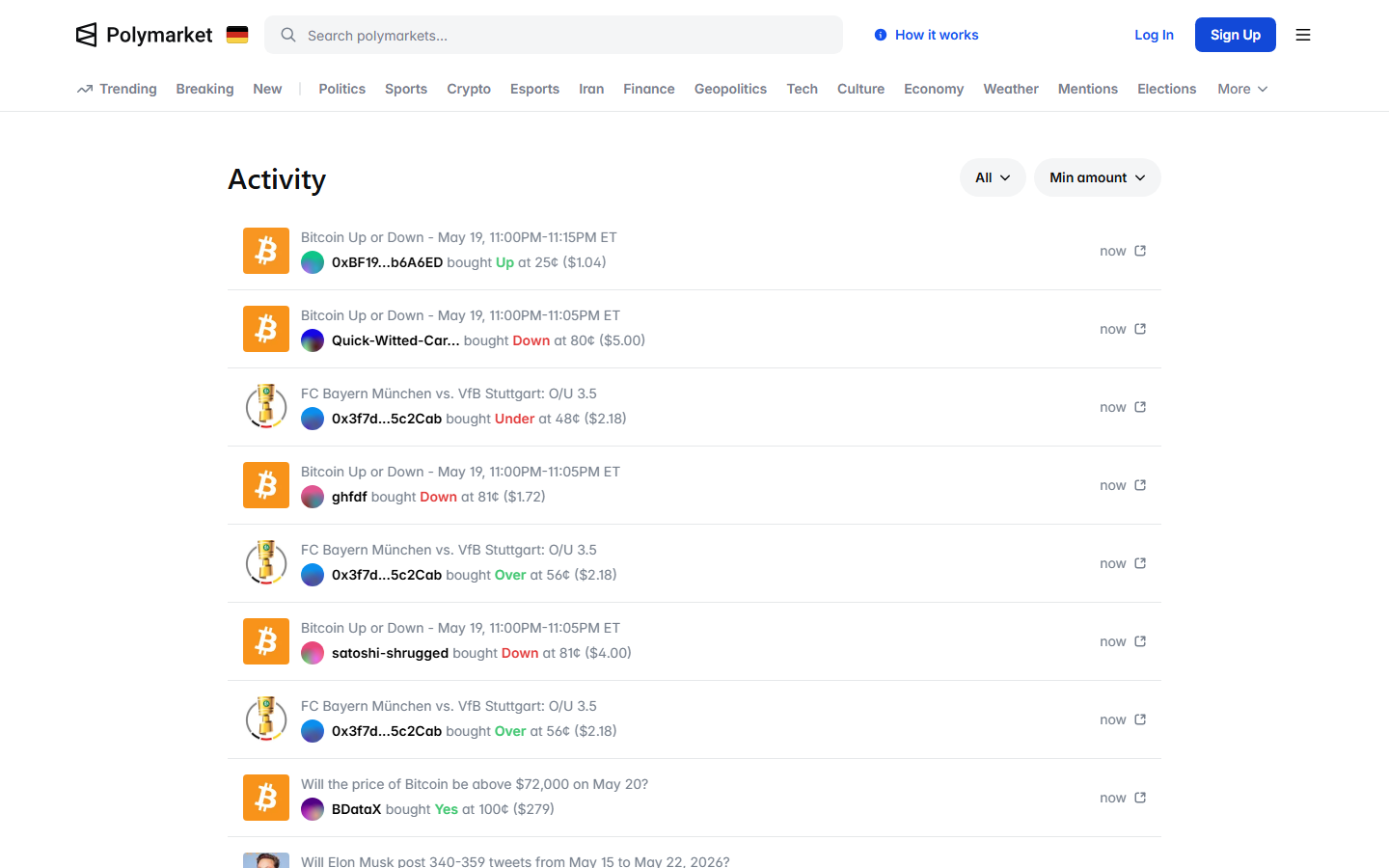
| User activity | Recent trades, timing, market side, and visible wallet behavior |
| Trader leaderboard | Ranked discovery by PnL, volume, ROI, and activity |
PnL shows dollars. ROI shows return relative to capital. Volume shows how much trading activity passed through the wallet. Sample size tells you whether the record has enough trades to matter.
High ROI with two trades is fragile. Moderate ROI with many trades across categories can be more informative.
Open positions can make a wallet look safer or riskier than realized PnL suggests. Check whether the wallet has unresolved exposure in one market, one category, or one side of a crowded trade. A useful PnL review asks what happens if the largest open position resolves against the wallet.
Compare wallets by PnL, ROI, volume, category mix, and current exposure. Then inspect individual trades only after the aggregate record looks worth your time. This keeps you from overvaluing one dramatic win or one recent loss.
Realized PnL comes from closed or resolved outcomes. Unrealized PnL reflects current market prices for open positions. Both numbers can move the story in different directions.
A trader with strong realized gains can still be carrying a large unrealized loss. A trader with weak realized results may have open positions that explain the risk they are taking.
ROI only helps when you understand the denominator. Return on a tiny amount can look impressive while total dollars remain small. Return on huge volume may show a repeatable process.
Compare ROI with volume and number of trades. That combination separates lucky small accounts from wallets with more meaningful sample size.
Break PnL into categories such as politics, crypto, sports, macro, or culture. A trader's overall result can hide one strong niche and several weak ones.
This matters when you use PnL for research. You may want to follow a wallet in one category and ignore it everywhere else.
Check the worst visible losing streak and the largest open loss. Drawdown tells you whether the wallet's strategy requires a level of patience or capital that you do not have.
A smooth equity curve is rare in prediction markets. The goal is to understand how the wallet behaves when trades go against it.
Ask whether the wallet's gains came from one market, whether open exposure is still large, whether recent entries are repeatable, and whether you can get a similar price. If those answers are weak, use the wallet as a case study instead of a trade signal.
Review resolved markets separately from active marks. Closed markets show what the wallet actually banked. Active marks show what the market currently thinks open positions are worth.
A strong PnL tracker lets you compare those views without mixing them into one flattering number. That separation matters when a trader has both old wins and large unresolved bets.
The final output should name total PnL, ROI, volume, active exposure, biggest wins, biggest losses, and the categories driving results. It should also make outliers visible. That output lets you compare wallets without letting one impressive number dominate the decision.
Add entry quality to the review when data allows it. A wallet that consistently buys before price moves deserves a different read from a wallet that wins only after chasing obvious news.
PnL explains the result. Entry quality helps explain whether the result may repeat.
Check these official Polymarket sources before you act on referral terms, deposit methods, fees, availability, verification, or resolution details.
Last verified: May 20, 2026
Review wallet profit, loss, and positions.
Find wallets to analyze in more detail.
Tools and related reading referenced by this guide.
Continue with nearby Polymarket research topics.
Use the Predicts.guru Polymarket wallet checker to look up trader PnL, open positions, win rate, trading history, and risk patterns.
Find Polymarket top traders, compare wallets by PnL, volume, ROI, and win rate, and understand the risks of copying smart money.
Track Polymarket whales, large wallets, smart money activity, position sizes, market moves, and wallet histories with Predicts.guru.