
Polymarket AI Agents: Use Cases, Limits, and Market Analysis Workflows
Learn how Polymarket AI agents can screen markets, summarize rules, monitor sources, analyze leaderboards, and where automation can fail.
Polymarket AI agents are software workflows that use market data, prompts, rules, and sometimes trading APIs to help analyze prediction markets. Use them as research assistants, not automatic profit machines. The safest first workflow is read-only: screen markets, summarize resolution rules, monitor official sources, and flag liquidity or spread problems before any trading automation.
- Use AI agents first for data and analysis, not unchecked execution.
- A good agent shows market question, source, timestamp, liquidity, spread, and uncertainty.
- Leaderboard analysis should find patterns, not copy trades blindly.
- Trading automation adds wallet, signing, API, partial-fill, and loss risk.
What Polymarket AI agents actually are
A Polymarket AI agent is not one fixed product. It can be anything from a simple research assistant that summarizes markets to a developer-built workflow that reads order books and prepares trades.
The useful way to understand agents is to split them into three layers: data, analysis, and action. For ordinary users, the safest starting point is the first two layers. The action layer is where an AI workflow can move from helpful to dangerous.
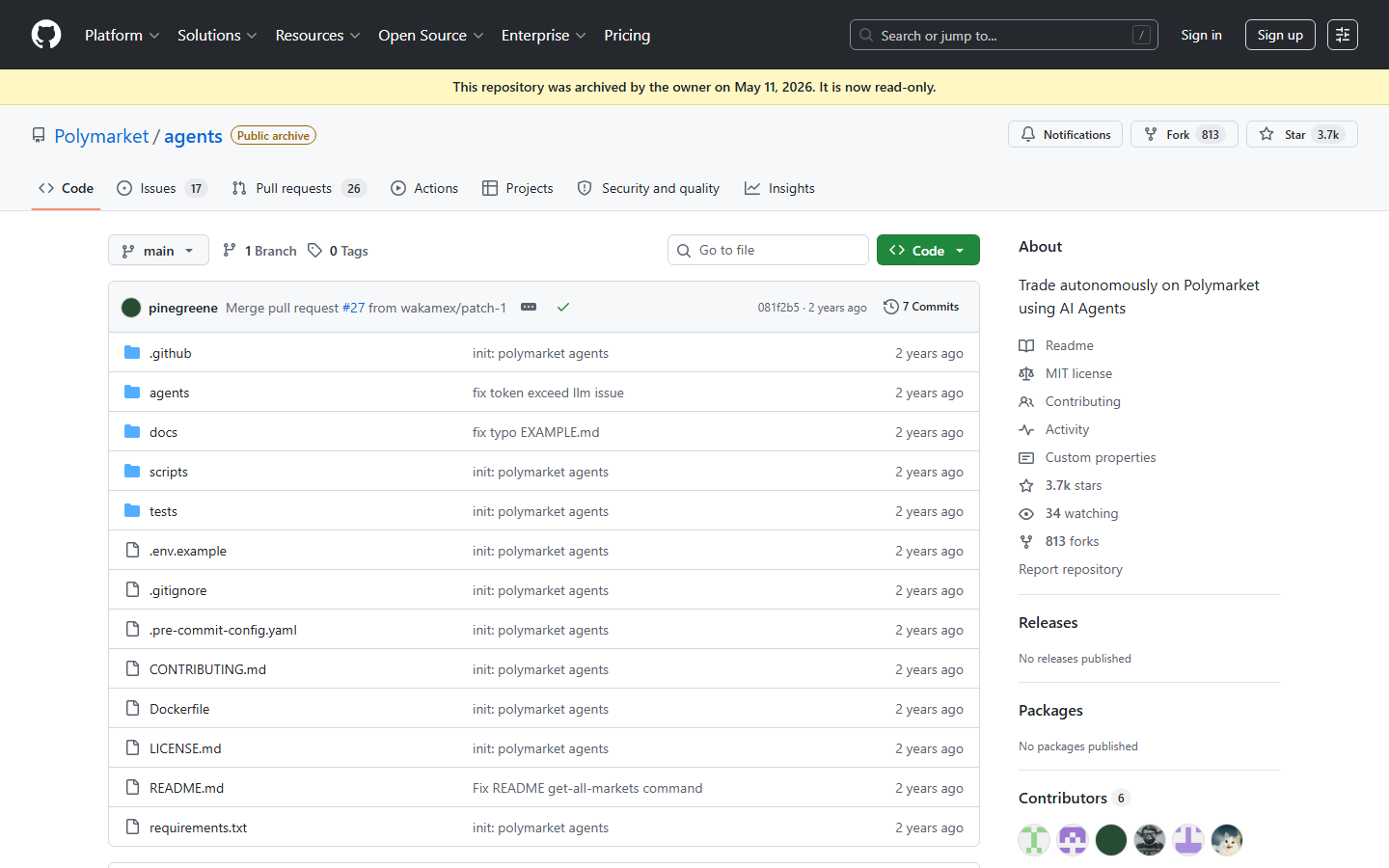
The archived Polymarket/agents GitHub repository described a developer framework for building AI agents around Polymarket. It included API integration, prediction-market utilities, RAG support, news and web search sourcing, Gamma market data, CLOB clients, and trade execution utilities. The repository was archived on May 11, 2026, so it should be treated as historical developer context, not a current plug-and-play trading product.
| Layer | What it does | Main risk |
|---|---|---|
| Data | Pulls markets, prices, spreads, order books, tags, events, trades, or user activity | Stale data, weak filters, missing context |
| Analysis | Summarizes market questions, sources, price moves, and trader behavior | Hallucination, vague reasoning, false confidence |
| Action | Sends alerts, prepares orders, cancels orders, or executes trades | Wallet risk, API errors, partial fills, losses |
Best use cases for Polymarket AI agents
The best Polymarket agents are not magic predictors. They are repeatable checklists with better data access. They help answer what a market is asking, whether the displayed probability is distorted by spread or liquidity, what source decides resolution, whether new information moved price, and whether visible traders show a pattern worth studying.
Market screening is the cleanest use case. Instead of scrolling through markets manually, an agent can build a shortlist for human review. A useful screener output should look like a research note, not a trade signal.
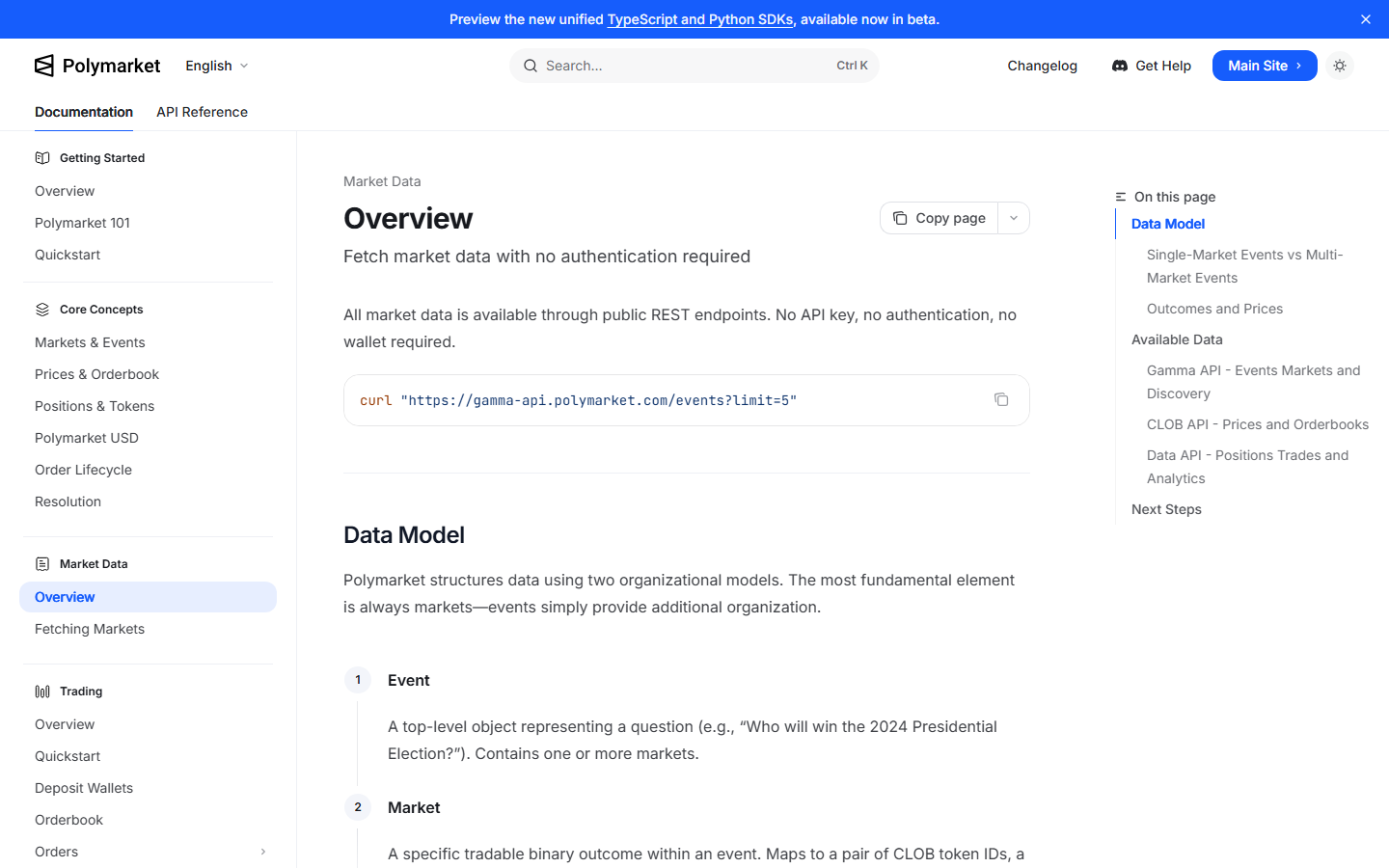
Resolution-rule checking is another strong use case. An agent can extract the exact title, question wording, source, deadline, outcomes, exclusions, and edge cases. The human check is mandatory: compare the AI summary against the original market text.
- Screen markets by volume, liquidity, spread, category, time remaining, and recent movement.
- Summarize the exact market question and resolution source.
- Monitor official sources, reputable reporting, and price movement.
- Review leaderboard behavior without copying trades blindly.
- Track exposure, open orders, related markets, and deadlines.
What a useful market screener should return
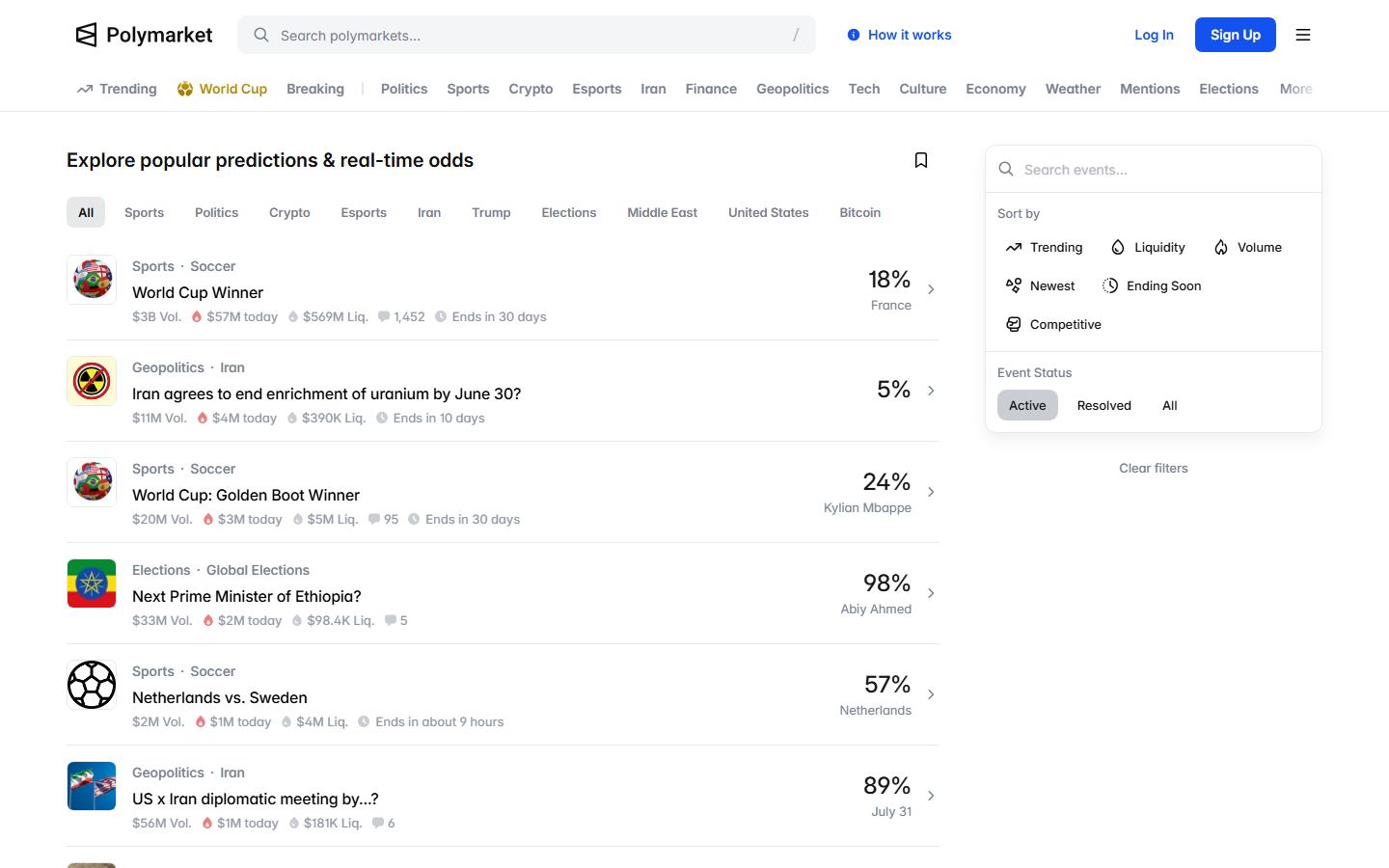
A practical screener should include the market title, category, current outcome prices, spread, volume or activity signal, liquidity or order book depth, time remaining, order-book status, and last checked timestamp. Reject markets where the data is too thin to interpret.
| Check | Agent output | Human question |
|---|---|---|
| Market question | One-sentence summary | Is this what the market really asks? |
| Implied probability | Current Yes/No price | Does the price reflect the latest known facts? |
| Spread | Narrow, medium, or wide | Is the headline probability reliable enough? |
| Liquidity | Low, moderate, or high | Can this market absorb realistic order size? |
| Resolution source | Named source or unclear | Who decides the final result? |
| Last checked | Timestamp and data source | Is this summary fresh? |
Leaderboard and source monitoring workflows
Many readers search for a Polymarket leaderboard because they want to know who is winning. An agent can help review visible trader behavior, but it cannot reveal every hidden reason behind a result. A profile may look impressive because of skill, timing, risk concentration, lucky resolution, one large win, or a strategy that no longer works.
A source-monitoring workflow can collect useful context, but the agent should not jump from news to a buy signal. Better output asks what changed, which source supports it, whether the source is primary or secondary, whether the market already moved, and whether the news actually affects resolution. A better leaderboard agent looks for patterns rather than heroes: repeated categories, holding periods, entry timing, market size, correlated bets, and loss history.
| Pattern | Why it matters |
|---|---|
| Repeated categories | A trader may specialize in politics, sports, crypto, or short-duration markets |
| Holding period | Fast turnover and long holds are very different strategies |
| Entry timing | Buying before news differs from chasing after movement |
| Market size | Wins in thin markets may not scale |
| Correlated bets | Several positions may depend on the same event |
| Loss history | Public attention often focuses on winners and ignores survivorship bias |
Where Polymarket AI agents fail
AI agents fail most often when users treat polished output as verified analysis. The most dangerous agent is not the one that says "I do not know." It is the one that gives a clean answer without showing the market text, source, timestamp, liquidity, spread, and uncertainty.
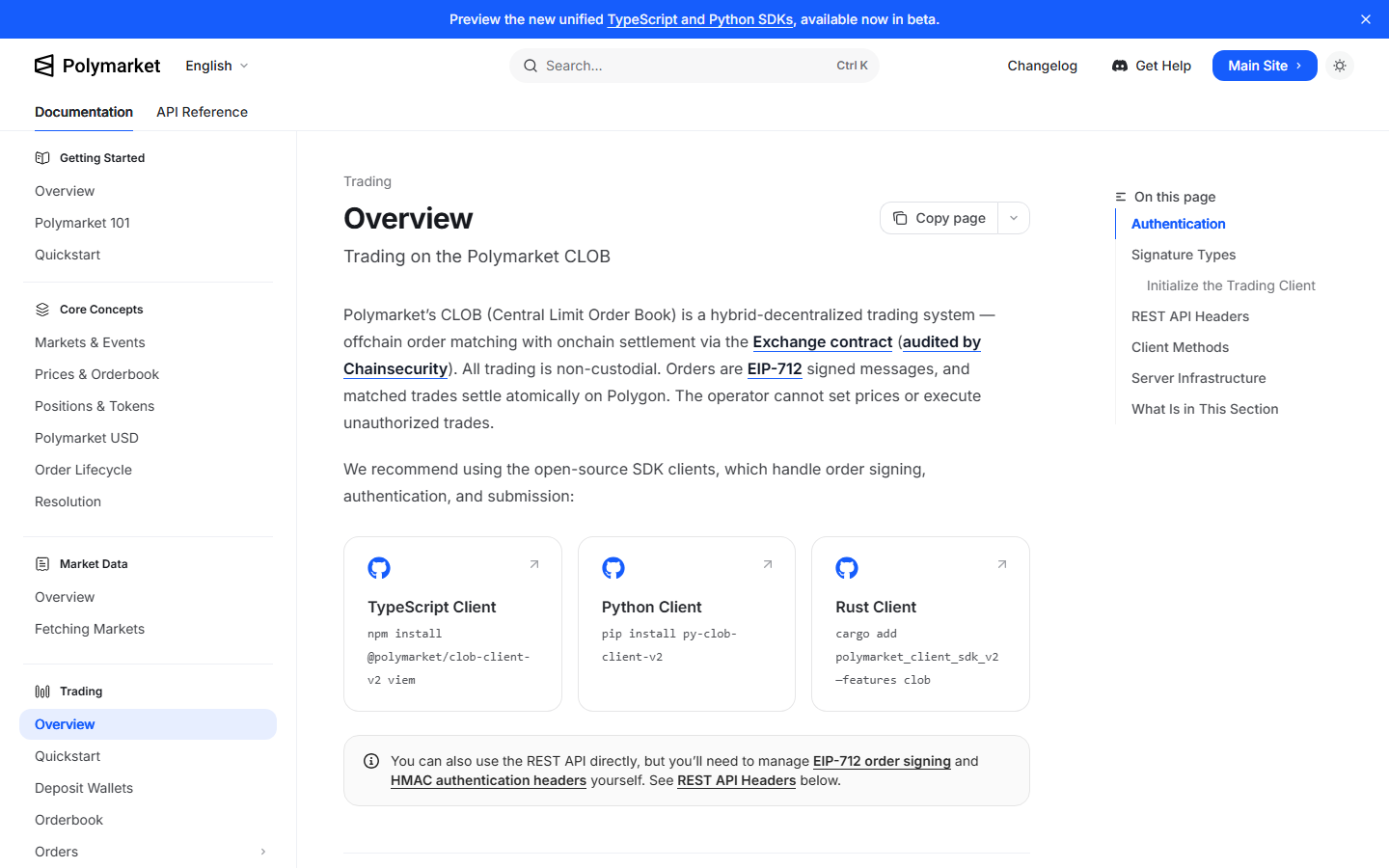
Some Polymarket AI trading bots may perform well in specific conditions, but profitability should never be assumed. A bot can be fast, consistent, and connected to market data while still losing money.
Be especially careful with claims about easy arbitrage or automatic profits. A theoretical price relationship is not the same as a filled trade. Real workflows face spreads, thin liquidity, timing delays, order priority, changing books, API issues, failed assumptions, and markets that resolve differently than a simplified model expects.
- Ambiguous market wording can be summarized too loosely.
- Weak source hierarchy can overweight social posts or screenshots.
- Thin liquidity and wide spreads can make a displayed price misleading.
- Stale data can produce confident but outdated summaries.
- Leaderboard survivorship bias can make visible winners look more repeatable than they are.
- Execution automation adds wallet, signing, API, and order risk.
- Availability varies by jurisdiction, so users should check current platform terms and local rules.
A useful Polymarket analytics workflow should move from broad screening to narrow verification. The order matters because it prevents the agent from jumping straight from price movement to a trade idea.
Start in research mode. Screen the market, read the exact question, build a source map, compare price movement with evidence, check leaderboards and holders carefully, then track exposure and deadlines. Keep research mode and execution mode separate.
- Screen the market for price, spread, liquidity, category, time remaining, and last checked timestamp.
- Read the exact question, source, deadline, outcomes, and edge cases.
- Build a source map with primary, strong secondary, weak secondary, and noise tiers.
- Compare price movement with evidence before treating a move as meaningful.
- Check visible holders and leaderboard behavior as context, not proof.
- Track correlated markets, deadlines, open orders, and any API or wallet actions.
A useful agent summary should include the original market question, resolution source, current price and timestamp, spread and liquidity context, source list behind any claim, confidence level with reasons, known uncertainties, and a clear statement of what the agent did not verify. If those items are missing, the output is only a rough note. It may still help you organize work, but it should not drive a trade or a copied position.
Predicts.Guru is built around the idea that Polymarket prices need context. A market price can be useful only after you understand the question, implied probability, liquidity, spread, resolution rules, and relevant evidence.
That is also the right way to use AI agents. Let them organize work, surface markets, summarize rules, and track changes. Keep final judgment tied to verifiable data.
Can AI agents trade on Polymarket automatically?
Technically, developer workflows can connect market data, prompts, rules, and trading APIs. Automatic trading adds wallet, signing, API, execution, and loss risk. Most users should start with research and alerting workflows.
Is a Polymarket AI agent the same as a trading bot?
Not always. An agent can summarize markets, monitor sources, or build a watchlist. A trading bot usually executes orders or follows predefined trading rules.
Can AI agents analyze the Polymarket leaderboard?
Yes, but public data does not reveal a trader's full risk, bankroll, reasoning, hedges, or luck. Use it for pattern analysis, not blind copying.
What is the safest first workflow?
Start read-only: screen markets, summarize resolution rules, monitor official sources, and flag liquidity or spread problems.
Educational content only. Verify live platform rules, fees, availability, and market resolution details before acting.
Check these official Polymarket sources before you act on referral terms, deposit methods, fees, availability, verification, or resolution details.
Last verified: Jun 20, 2026
Use a read-only market research workflow before trusting automation.
Pick the right research layer before building or using an agent.
Tools and related reading referenced by this guide.
Continue with nearby Polymarket research topics.
Compare free Polymarket analytics tools for wallet checks, event research, leaderboards, market context, and public trader discovery.
Learn how to convert Polymarket prices into implied probability, then check spread, liquidity, rules, and wallet context before trusting the signal.
Compare Polymarket copy trade bots by controls, fees, custody, slippage, wallet research, execution risk, and safest first-test workflow.