Kalshi vs Polymarket: A Practical Comparison for Prediction Market Users
Compare Kalshi and Polymarket by access, regulation, market coverage, fees, liquidity, public data, and resolution rules before using either platform.
Kalshi vs Polymarket depends on access, regulation, market choice, fees, liquidity, and how much public trader data you want. Kalshi fits users who prefer a regulated, exchange-style event-contract platform. Polymarket fits users who want crypto-native markets, public trader activity, and strong market-sentiment data. As of June 20, 2026, Polymarket also separates its international crypto-based product from Polymarket US, a fiat-based U.S. regulated product.
- Pick Kalshi for a more traditional regulated-exchange feel.
- Pick Polymarket International for crypto-native market analysis and public data.
- Check fees, spreads, liquidity, and resolution rules before trading.
- Treat market prices as signals, not conclusions.
Which prediction market platform is better for you?
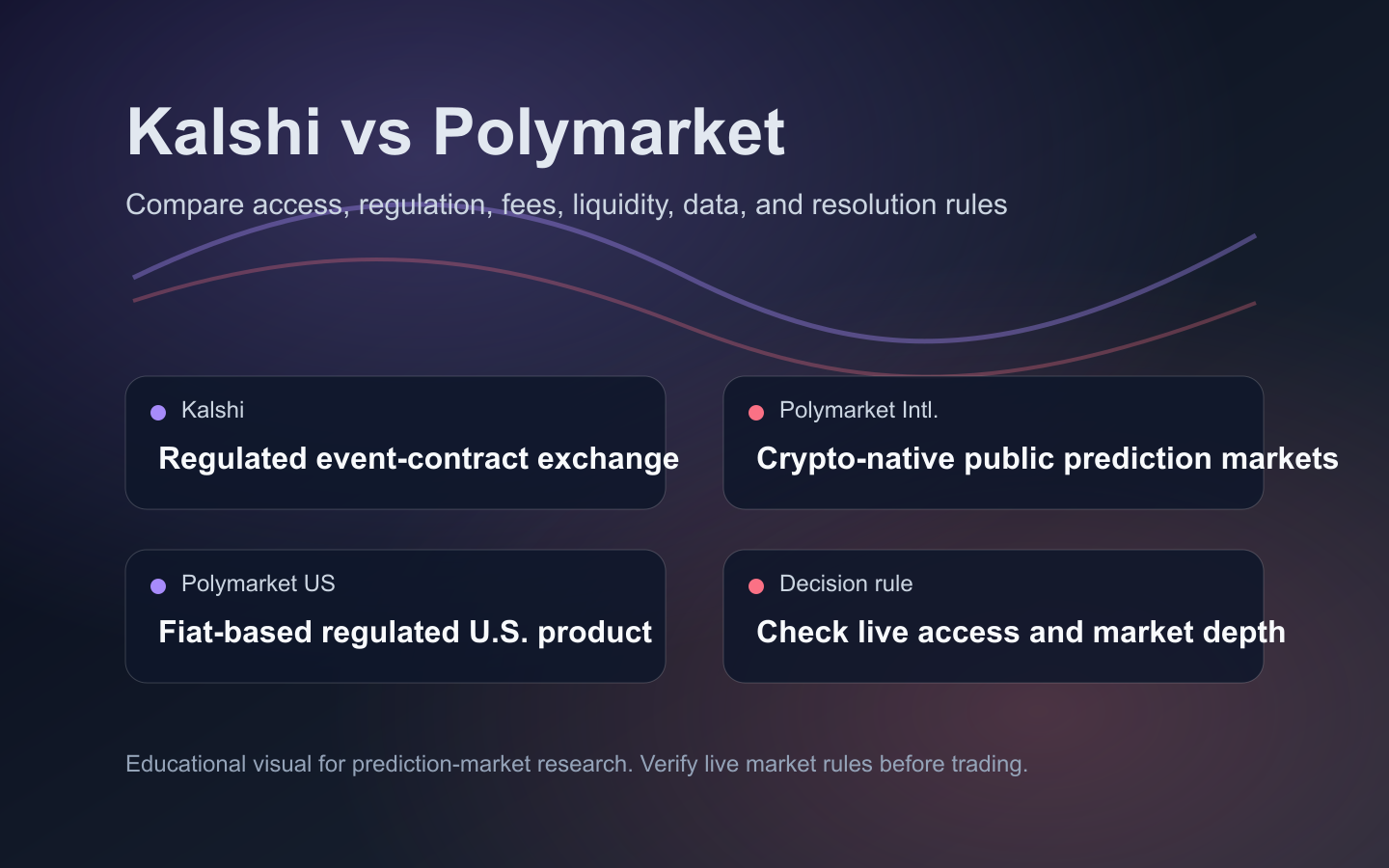
Kalshi vs Polymarket depends on access, regulation, market choice, fees, liquidity, and how much public trader data you want. Kalshi fits users who prefer a regulated, exchange-style event-contract platform. Polymarket fits users who want crypto-native markets, public trader activity, and strong market-sentiment data. As of June 20, 2026, Polymarket also separates its international crypto-based product from Polymarket US, a fiat-based U.S. regulated product.
- Pick Kalshi for a more traditional regulated-exchange feel.
- Pick Polymarket International for crypto-native market analysis and public data.
- Check fees, spreads, liquidity, and resolution rules before trading.
- Treat market prices as signals, not conclusions.
What Kalshi and Polymarket Are
Kalshi and Polymarket are prediction market platforms. Users trade contracts tied to real-world outcomes, such as elections, sports, crypto prices, inflation releases, weather, and public news.
The basic idea is easy to read: a contract priced at 64 cents implies about a 64% market probability. The hard part is deciding whether that number is useful. A thin market with a wide spread can show a headline probability that looks precise but costs much more to trade than it first appears.
Kalshi presents itself as a regulated financial exchange for event contracts. Its regulation page says Kalshi operates as a Commodity Futures Trading Commission-regulated designated contract market, and the CFTC DCM list shows Kalshi as designated on November 3, 2020.
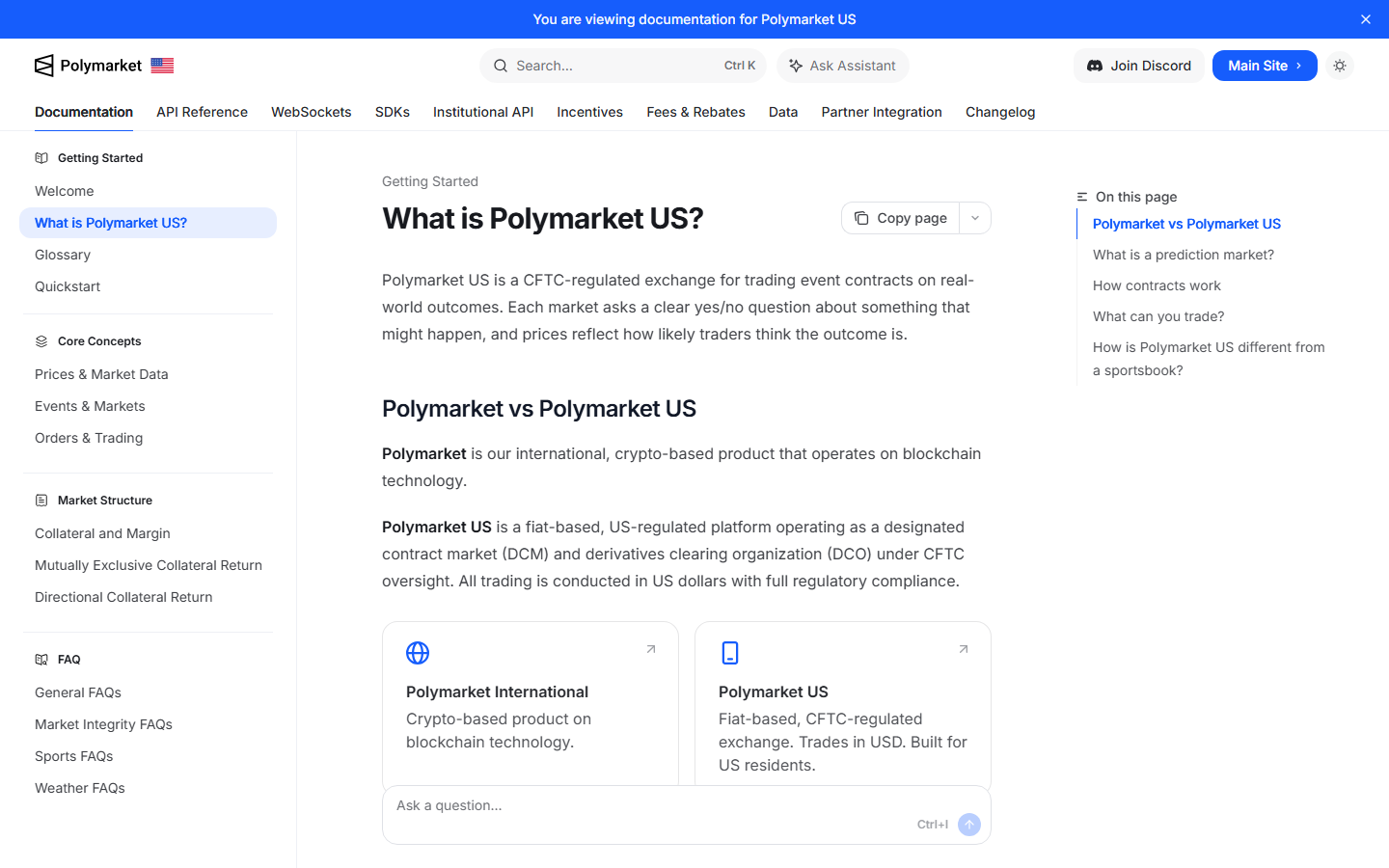
Polymarket has two relevant products. Polymarket International is crypto-based and uses blockchain infrastructure. Polymarket US describes itself as a fiat-based, CFTC-regulated exchange for U.S. residents.
| Comparison point | Kalshi | Polymarket International | Polymarket US |
|---|---|---|---|
| Main model | Regulated event-contract exchange | Crypto-native prediction market | Fiat-based U.S. regulated event-contract exchange |
| Currency flow | U.S. dollar-style exchange account | Crypto wallet and USDC-style flow | U.S. dollars |
| Data style | Exchange-style market data | Public markets, profiles, APIs, leaderboards | U.S. platform market data |
| Regulation | CFTC-regulated DCM | International product with geographic restrictions | CFTC-regulated DCM/DCO structure |
| Best fit | Users who want regulated event contracts | Users who want public prediction-market data and crypto-native markets | U.S. users comparing regulated event contracts |
Regulation and Availability: Start Here
Regulation is the first filter. If you cannot use a platform from your location, the fee table and market design do not matter.
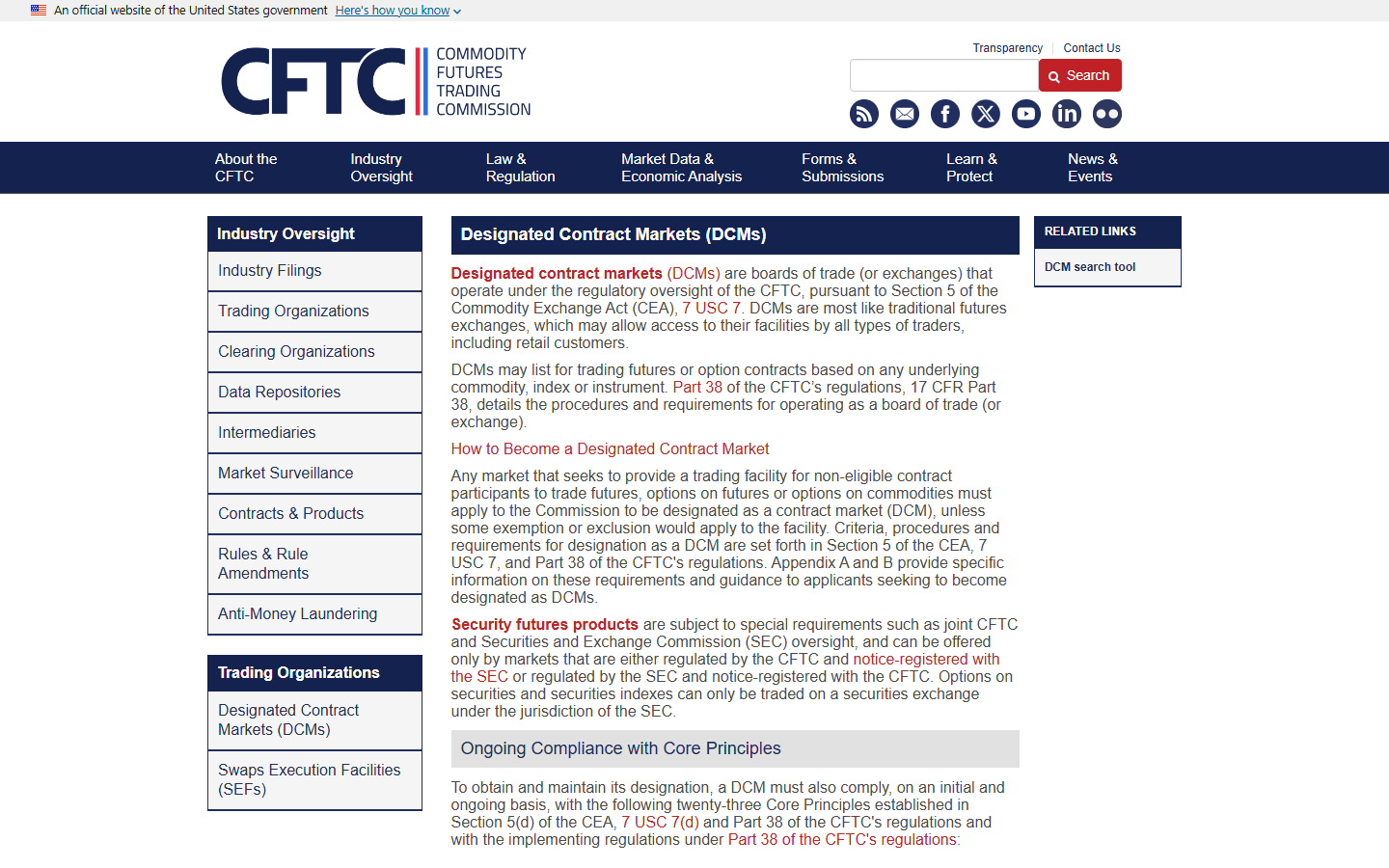
Kalshi operates as a CFTC-regulated designated contract market. The CFTC explains that designated contract markets are exchanges under CFTC oversight and can allow retail customer access. Kalshi's own regulation page also says it applies AML/KYC controls and follows CFTC rules for event contracts.
Polymarket's regulatory history is more complicated. On January 3, 2022, the CFTC announced an order against Blockratize, Inc., doing business as Polymarket, for offering off-exchange event-based binary options and failing to obtain DCM or swap execution facility registration. That order required non-compliant markets to be wound down and included a $1.4 million civil monetary penalty.
As of June 20, 2026, the picture is more nuanced:
For global users, the safest reading is this: do not assume "Polymarket" means the same product in every country. Check the exact domain, terms, KYC rules, and market availability before trading. This article is educational context, not a legal recommendation.
- Polymarket International's geographic restrictions docs list blocked order placement for several countries, including the United States, United Kingdom, Germany, France, Australia, Russia, and others.
- Polymarket US documentation says Polymarket US is fiat-based, built for U.S. residents, and operates under CFTC oversight.
- The CFTC DCM list shows QCX LLC doing business as Polymarket US as designated on July 9, 2025.
Market Variety: Politics, Sports, Crypto, and Macro Events
Kalshi and Polymarket both focus on real-world outcomes, but their market mix and culture can differ.
Polymarket International has been associated with politics, crypto, news, culture, sports, and fast-moving public narratives. A reader might use it to study how traders price an election, a court decision, a crypto ETF-style event, a geopolitical headline, or a sports result. The public-data layer makes it useful even for people who do not trade, because you can inspect market movement, order books, public profiles, and trader behavior.
Kalshi has a more exchange-like feel. Users tend to evaluate markets through contract terms, regulatory status, data sources, and settlement rules. Depending on live listings, Kalshi users may compare events around economic releases, weather, politics, sports, financial benchmarks, or public outcomes.
Polymarket US, according to its documentation checked on June 20, 2026, lists sports categories such as NFL, NBA, NHL, MLB, MLS, college basketball, tennis, and golf, while saying politics, culture, finance, and economics are coming soon. A practical comparison should use market depth, not category labels alone:
A broad category does not make a market good. A narrow market with clear rules, tight spreads, and enough open interest can be more useful than a popular headline market with vague resolution language.
| Example market type | What to compare |
|---|---|
| Politics | Exact question, eligible jurisdiction, resolution source, dispute process |
| Sports | Market depth, spread, limits, regulatory access, settlement timing |
| Crypto | Price source, timestamp, exchange reference, liquidity near the event |
| Macro | Official data source, release time, revision risk, contract wording |
Kalshi feels closer to a financial exchange. A user opens an account, completes required identity checks, funds the account through supported methods, and trades event contracts through an order book. The experience will feel more familiar to people who have used brokerages or regulated trading platforms.
Polymarket International feels more crypto-native. Users interact with wallet-based infrastructure, USDC-style collateral, public profiles, and market data APIs. Its prices and order book docs describe a central limit order book where users trade with each other and prices come from supply and demand.
Polymarket US uses a different setup. Its documentation describes a U.S. dollar platform, not the same wallet-first international flow. That distinction matters for readers comparing "Polymarket vs Kalshi" from the United States.
For beginners, the usability question is not "which interface looks better?" A better checklist is:
- Can you legally access the platform from your location?
- Can you understand the funding and withdrawal flow?
- Does the order ticket show fees before execution?
- Can you read the bid, ask, spread, depth, and settlement rules?
- Can you exit a position before the event resolves?
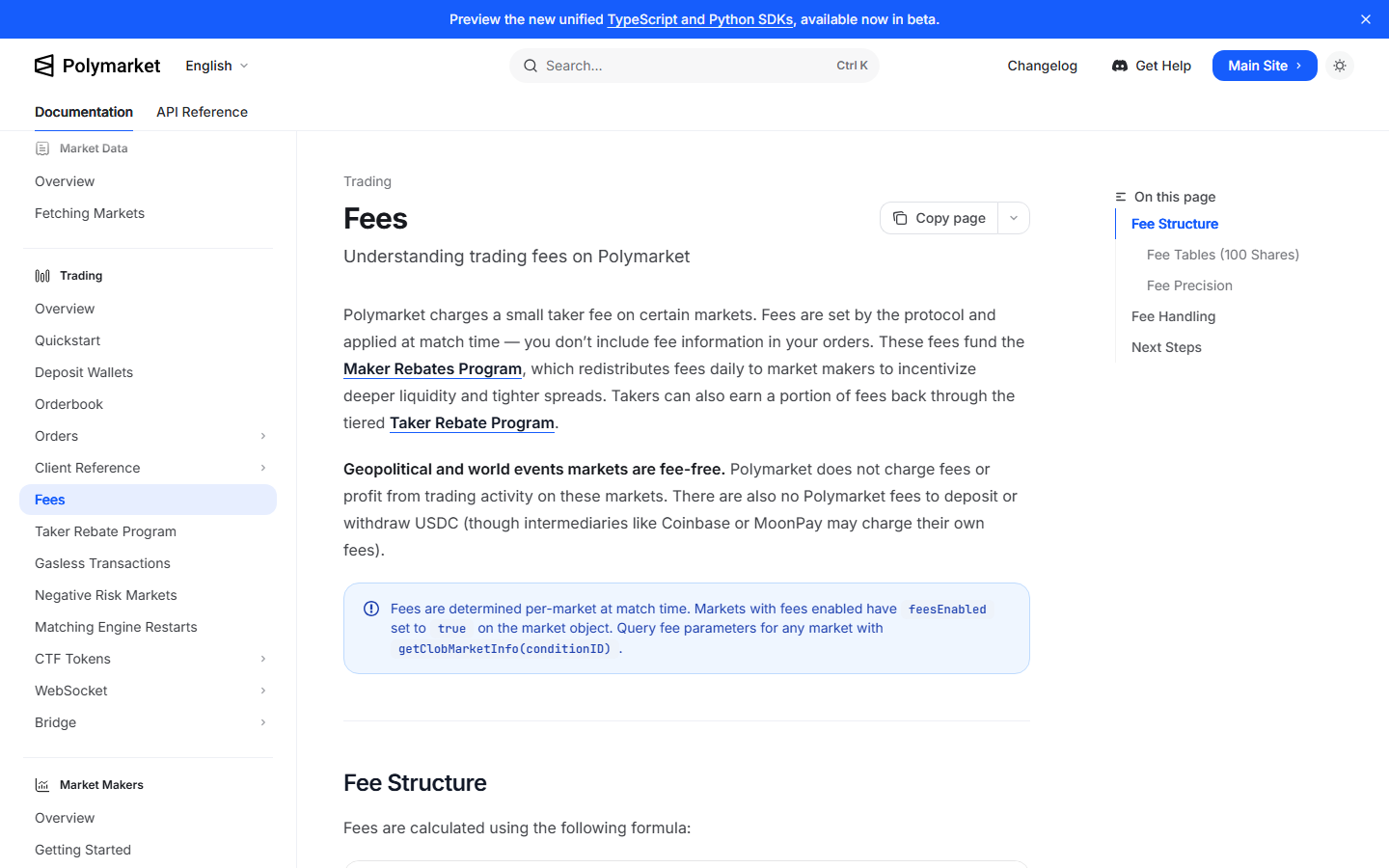
Fees change, so check the live fee page before trading. As of the official materials checked on June 20, 2026, both platforms use probability-sensitive fee models rather than a simple flat percentage of trade value.
Kalshi's public fee schedule says general trading fees are calculated with a formula based on contract count, price, and uncertainty: `0.07 x C x P x (1-P)`, rounded up to the next cent. In that formula, `C` is the number of contracts and `P` is the contract price in dollars. The same schedule says there is no settlement fee. Some markets or order types can have different fee rules, so the order ticket matters more than a rule of thumb.
Polymarket International's fees docs say taker fees apply on certain markets and use `C x feeRate x p x (1-p)`. The docs list different fee rates by category, say makers are not charged fees, and note that geopolitical and world events markets are fee-free. The same page says there are no Polymarket fees to deposit or withdraw USDC, though intermediaries can charge their own fees.
Polymarket US has its own fee schedule. It lists an exchange-wide formula effective April 3, 2026, with taker fees based on `Theta x C x p x (1-p)` and maker rebates. The practical lesson: compare the full cost of entry and exit.
A low stated fee does not help if the spread is wide. A tight spread does not help if you cannot resolve the contract rules.
| Cost item | Why it matters |
|---|---|
| Trading fee | Reduces expected return at execution |
| Spread | You may buy at the ask and sell at the bid |
| Slippage | Large orders can move thin markets |
| Funding cost | Cards, banks, wallets, bridges, or third parties can add cost |
| Settlement timing | Funds may stay tied up until the market resolves |
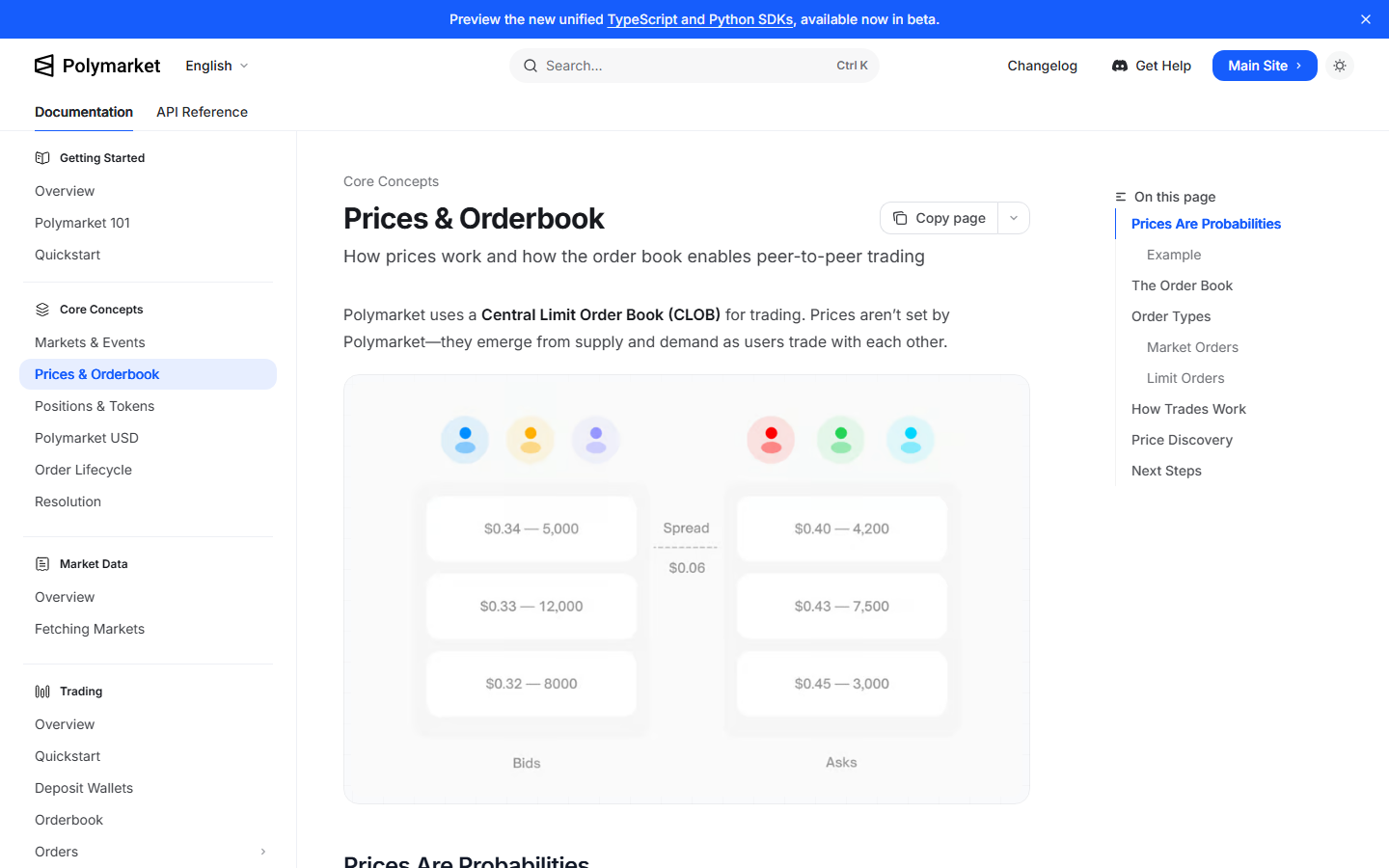
Liquidity decides whether a market price can support your decision. A contract showing 62 cents looks clean, but the order book may tell a different story.
Polymarket's docs say the displayed price can be the midpoint of the bid-ask spread, and they give a simple example: if the best bid is 34 cents and the best ask is 40 cents, the displayed midpoint is 37 cents. A buyer would pay the ask, not the midpoint. A seller would receive the bid, not the midpoint.
Use the same thinking on Kalshi and Polymarket:
For market-signal reading, spreads matter as much as direction. A move from 42 cents to 48 cents means less if a small trade pushed a thin book. A move with stronger depth and repeated fills deserves more attention.
- Check the best bid and best ask.
- Check how many contracts sit near those prices.
- Compare volume with open interest.
- Avoid reading a stale last trade as a live probability.
- Re-check the order book before placing a large order.
Polymarket leaderboards are a major difference for readers who care about trader behavior. Polymarket's API navigation includes public-profile, user-activity, user-position, and trader-leaderboard endpoints. That public data can help you study how active traders behave across markets.
Leaderboards can also mislead. A trader near the top of a ranking may have:
Use public trader data as context, not a copy-trading signal. A leaderboard tells you who has shown activity or performance under a specific measurement method. It does not tell you whether the next trade is good.
Predicts.Guru can help with this part of the workflow: use it to read Polymarket markets, trader activity, liquidity, spreads, and price movement with context before treating a leaderboard rank as meaningful.
- Large unresolved positions.
- One outsized winning market.
- High volume with poor risk control.
- A time-window advantage.
- PnL that does not account for liquidity needed to exit.
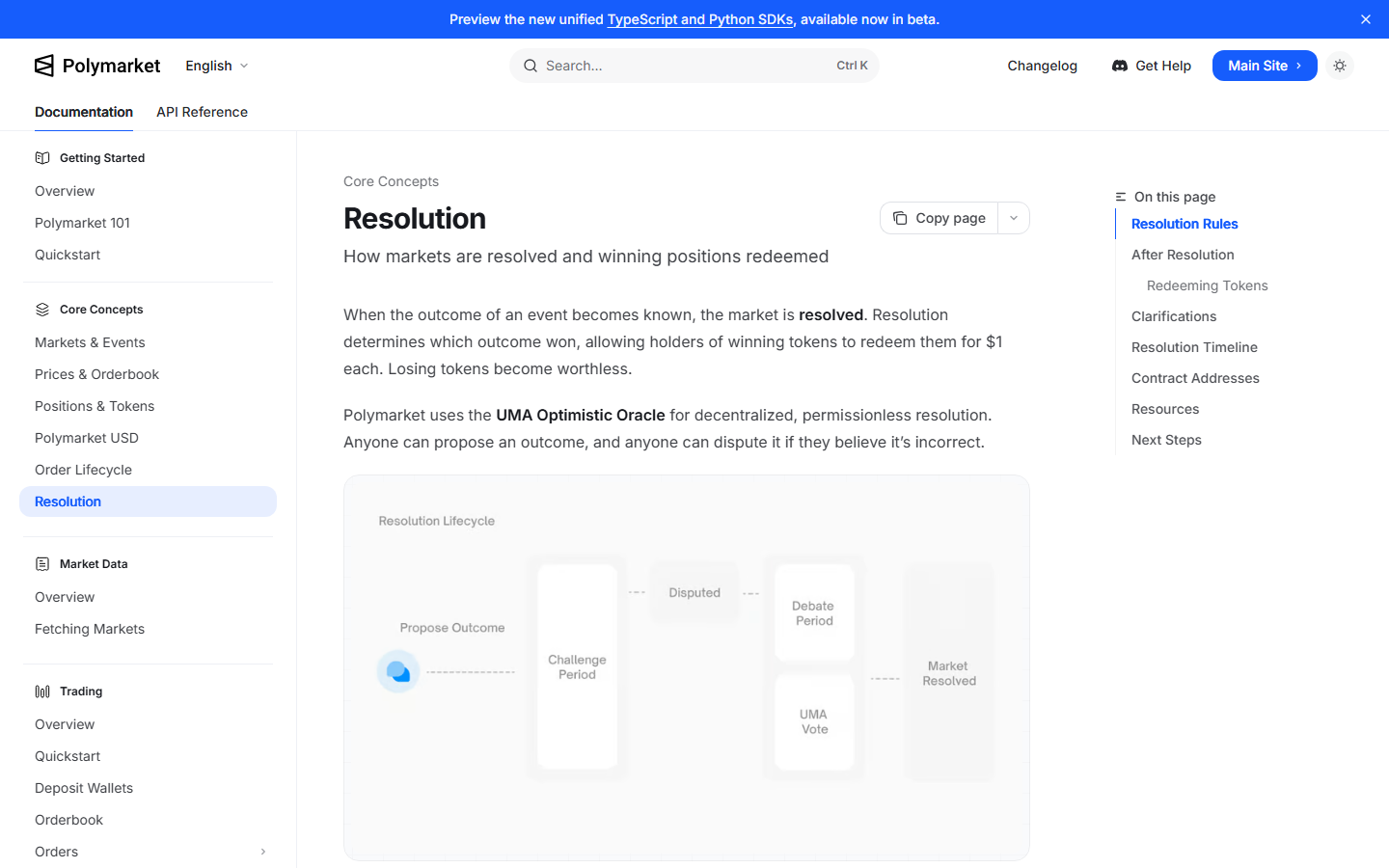
Prediction markets are only as clear as their resolution rules.
Polymarket International's resolution docs say markets use pre-defined rules covering the resolution source, end date, and edge cases. The same page says Polymarket uses the UMA Optimistic Oracle, where anyone can propose an outcome and others can dispute it. An undisputed resolution can complete in about two hours after proposal, while disputed cases can take several days.
Kalshi markets also require careful contract-rule reading. Because Kalshi operates as a regulated exchange, users should read each market's rulebook terms, source, timing, and settlement conditions before trading. The key question stays the same across both platforms: who decides the outcome, using which source, by what deadline?
Before trading any market, answer these questions: A market with vague rules can produce a bad experience even if your forecast was right.
- Does the title match the detailed rules?
- Which source decides the outcome?
- Does the market handle delays, cancellations, recounts, or revised data?
- Can the market resolve as ambiguous, void, or split?
- How long can settlement take after the event?
Kalshi and Polymarket are alternatives only at a broad level. Both let users trade event outcomes. The details differ enough that a serious comparison should separate trading, access, and research.
Use Kalshi as an alternative if you want a regulated exchange-style platform and your target markets are available there. Use Polymarket International as an alternative if you want crypto-native markets, public data, API visibility, and strong trader-behavior signals from eligible regions.
Use Polymarket US as an alternative if you are comparing U.S. regulated event-contract platforms and want to evaluate its available sports and future category coverage against Kalshi. For many readers, the best tool depends on the job:
| Job to be done | Better fit to evaluate first |
|---|---|
| Trade regulated event contracts | Kalshi or Polymarket US |
| Read global market sentiment | Polymarket International |
| Study public trader behavior | Polymarket International |
| Compare sports event contracts in the U.S. | Kalshi and Polymarket US |
| Analyze election or crypto narratives | Check live availability, rules, and liquidity on both |
Choose Kalshi if you want: Choose Polymarket International if you want: Choose Polymarket US if you want:
Avoid choosing any platform based on brand alone. Two markets with the same headline can have different fees, depth, access rules, and settlement language.
- A regulated-exchange model.
- Event contracts framed as financial products.
- A more traditional account and compliance flow.
- U.S. regulatory context as a central feature.
- Contract terms and official settlement sources at the center of the experience.
- Crypto-native prediction markets.
- Public profiles, market data, and trader activity.
- Strong visibility into market sentiment.
- Leaderboards and wallet-style analysis.
- A research layer around politics, crypto, news, sports, and culture markets, where available.
- A U.S.-regulated Polymarket product.
- U.S. dollar trading rather than the international crypto flow.
- Sports markets listed in the current documentation.
- A closer comparison to Kalshi as a regulated event-contract platform.
Use this checklist before treating any prediction market price as useful: Prediction markets can compress public expectations into a price. That price still needs context.
- Access: Can you use the platform and the specific market from your location?
- Market question: Does the title match the detailed rules?
- Price: Are you reading the midpoint, last trade, bid, or ask?
- Spread: How much do you lose by entering and exiting at current prices?
- Depth: Can the market absorb your trade size?
- Fees: Does the order ticket show the total execution cost?
- Resolution: Who decides the outcome, and which source controls?
- Timing: Can you exit before resolution if new information changes the price?
- Leaderboard data: Does trader activity support the thesis, or does it create false confidence?
- Risk: Can you afford a full loss on the position?
Is Kalshi legal?
Kalshi is listed by the CFTC as a designated contract market, and Kalshi describes itself as a CFTC-regulated financial exchange. Legal access can still depend on your location, account eligibility, product category, and current rules. Check Kalshi's current terms and your local requirements before trading.
Is Polymarket available in the United States?
Polymarket International's geographic restrictions page lists the United States as blocked for order placement as of June 20, 2026. Polymarket US is a separate fiat-based product that its documentation describes as built for U.S. residents and regulated under CFTC oversight.
Which has lower fees, Kalshi or Polymarket?
There is no single answer across all markets. Kalshi, Polymarket International, and Polymarket US use formulas that depend on contract count, price, and market or fee category. Compare the fee shown on the order ticket, then add spread, slippage, and funding costs.
Are Polymarket leaderboards useful?
Polymarket leaderboards are useful for research, but they are not trade recommendations. Rankings can reflect time period, volume, unresolved positions, or one large result. Use leaderboards with market rules, liquidity, price movement, and trader history before drawing conclusions.
Are prediction market prices reliable?
Prediction market prices can be useful signals, especially in liquid markets with tight spreads and clear rules. They are not guarantees. A price can be distorted by thin liquidity, poor resolution wording, large traders, news timing, or a wide bid-ask spread.
Kalshi vs Polymarket is not a one-word choice. Kalshi fits users who want a regulated exchange-style platform. Polymarket International fits users who care about crypto-native markets, public trader data, and market-sentiment analysis. Polymarket US adds a separate U.S. regulated product that should be compared on its own terms.
Before choosing, check access, fees, spread, depth, market rules, and settlement mechanics. If you are using Polymarket data as a signal, use tools like Predicts.Guru to read the market with context instead of copying the headline probability or leaderboard rank.
Educational content only. Verify live platform rules, fees, availability, and market resolution details before acting.
Check these official Polymarket sources before you act on referral terms, deposit methods, fees, availability, verification, or resolution details.
Last verified: Jun 20, 2026
Check market movement and liquidity before relying on either platform.
Compare regulated and research-only options before choosing a platform.
Tools and related reading referenced by this guide.
Continue with nearby Polymarket research topics.
Compare Polymarket alternatives for USA users, including Kalshi, Robinhood event contracts, PredictIt, market access, fees, and limits.
Understand Polymarket availability questions, jurisdiction restrictions, user responsibility, risk checks, and what to verify before using the platform.
Understand Polymarket fees, including taker fees on some markets, fee-free categories, deposit and withdrawal notes, spreads, and liquidity costs.